This project is sourced from another site, not written by us — this list is our best match of their components against what we stock, not a verified bill of materials. Always check the original blog (linked above) for the actual parts list before buying.
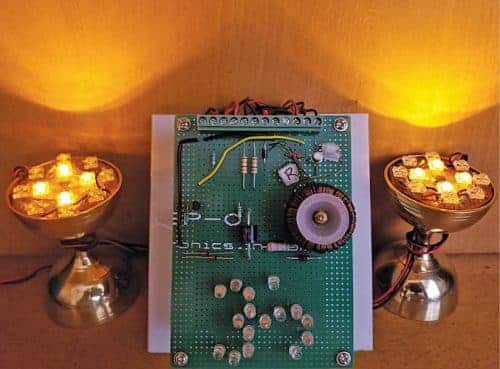
This collection of solar-powered electronics projects utilizes photovoltaic panels to convert ambient sunlight into electrical energy, serving as the primary power source for various discrete circuits. To manage and optimize this intermittent power, specialized integrated circuits like the LTC3105 and CL0116 are employed. The LTC3105 acts as a step-up DC/DC converter capable of harvesting energy from very low voltage solar sources, making it ideal for charging supercapacitors or running low-power electronics efficiently. Meanwhile, the CL0116 is commonly used to drive LEDs from a single-cell or low-voltage input, often functioning in solar garden lights to automatically switch on when darkness falls. Basic semiconductor components such as BC547 transistors and 1N4007 diodes are integrated into the schematics for switching, amplification, and reverse-polarity protection. Light-dependent resistors (LDRs) act as optical sensors that change their resistance based on ambient light levels, allowing circuits to detect day and night transitions. Supercapacitors are used alongside or in place of traditional batteries to store harvested electrical energy quickly and reliably, releasing it to power white LEDs or basic sensor loads when direct sunlight is absent. Through these combinations of passive components, diodes, transistors, and energy-harvesting ICs, builders can construct functional, autonomous analog systems that operate entirely on renewable solar power.
Why Build This
Create eco-friendly home lighting and portable emergency lanterns using renewable solar energy.
Experiment with energy harvesting circuits and supercapacitors to design battery-less electronics.
Gain hands-on experience with discrete analog components, light sensors, and power management ICs.
Real-World Application
Eco-friendly home lighting, portable emergency lanterns, battery-less IoT sensor nodes, and renewable energy utilization for gardens and outdoor spaces.
Skills You'll Learn
Solar energy harvesting
discrete circuit assembly
sensor integration with LDRs
power management with specialized ICs
diode protection
transistor switching
Safety Precautions
Ensure proper polarity when connecting solar panels, batteries, and supercapacitors to prevent short circuits or component damage.
Technology Tags
SOLAR ENERGY
RENEWABLE ENERGY
LEDS
ENERGY HARVESTING
MPPT
SUPERCAPACITORS
DC-DC CONVERSION
LIGHTING SYSTEMS
Frequently Asked Questions
No, these are purely analog and discrete hardware projects, so no software or coding is required.
The circuits are designed around the listed components, but energy storage choices depend on voltage specifications and proper charging management for your specific circuit design.
An LDR (Light-Dependent Resistor) changes its resistance based on ambient light, allowing the circuit to automatically detect when it is night time and turn on the white LEDs.
Gallery
This page is part of Kitkraft's Project Hub — a curated collection of electronics & robotics projects gathered from the maker community to help students and hobbyists discover and learn to build. Kitkraft does not claim authorship of the original project, and makes no representation as to the accuracy, completeness or safety of third-party source material. The summary and "How It Works" explanation above are AI-generated, rewritten with reference to the original tutorial — not a reproduction of it. Full credit and a direct link to the original source are provided above. If you're the original creator and have a concern about how your work is represented here, please contact us and we'll address it promptly.
Kitkraft Project Hub — curated from the maker community, credited at the source.
 10pcs 5mm RED Diffused Light Emitting Diodes - LEDs Set
Rs. 39.00
 400 Points Mini Solderless Prototype PCB Breadboard High Quality
Rs. 89.00
 MB102 Adjustable Breadboard Power Supply Module (3.3V & 5V) for Arduino & Raspberry Pi
Rs. 139.00
 Jumper Wire 10 Pin Male To Male 20cm
Rs. 45.00
 Jumper Wire 10 Pin Male To Female 20cm
Rs. 45.00


