This project is sourced from another site, not written by us — this list is our best match of their components against what we stock, not a verified bill of materials. Always check the original blog (linked above) for the actual parts list before buying.
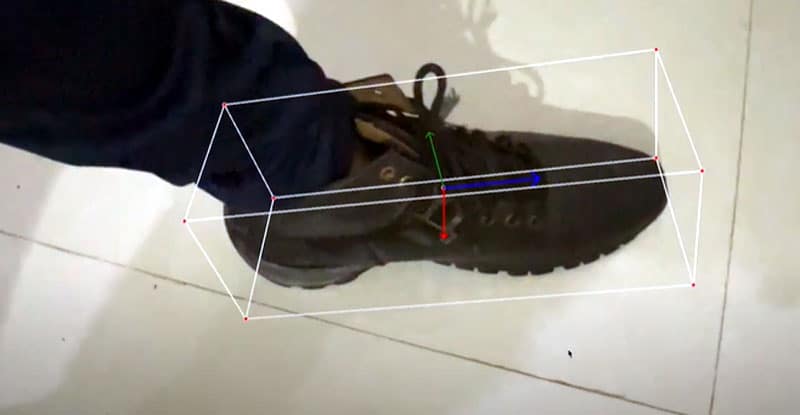
This advanced artificial intelligence and edge machine learning project operates by combining computer vision software with a single-board computer and a standard USB camera. The USB camera connects directly to the Raspberry Pi, continuously capturing live video frames of the physical environment. These raw image frames are then processed in real-time using Python alongside two primary software libraries: OpenCV and MediaPipe. OpenCV manages the fundamental video stream handling, image manipulation, and display functions. Meanwhile, the MediaPipe library applies pre-trained machine learning models to detect, recognize, and track 3D objects or spatial landmarks within the camera's field of view. By processing the visual data frame by frame, the system extracts geometric and spatial features, allowing it to calculate the position, orientation, and movement vectors of targeted objects in a three-dimensional space. Because the processing occurs locally on the edge device without relying on external cloud servers, the system achieves low-latency inference suitable for interactive tracking applications. Undergraduate engineering students can modify the Python code to adapt the detection pipelines, adjust tracking confidence thresholds, or integrate the spatial data into broader automation routines.
Why Build This
Design and deploy real-time spatial awareness algorithms suitable for autonomous robotics navigation and mobile manipulation systems.
Bridge the gap between theoretical machine learning concepts and practical edge implementation using compact single-board computer hardware.
Develop foundational computer vision pipelines applicable to modern augmented reality (AR) and virtual reality (VR) development environments.
No specific precautions noted for this build — always follow general electronics safety practices.
Technology Tags
PYTHON
MEDIAPIPE
OPENCV
COMPUTER VISION
3D OBJECT TRACKING
IMAGE PROCESSING
ROBOTICS
Frequently Asked Questions
The project data specifically lists a Raspberry Pi or an Apple M1 Chip SBC. Using a compatible Linux-based single-board computer with sufficient processing power is typically required to run the MediaPipe and OpenCV pipelines effectively.
No, this system utilizes a standard USB camera. The 3D object recognition and spatial tracking capabilities are achieved through software algorithms in the MediaPipe library analyzing standard 2D video feeds.
Once Python, OpenCV, and MediaPipe are installed on your board, the core machine learning inference and object tracking execute locally on the device without requiring an active internet connection.
Gallery
This page is part of Kitkraft's Project Hub — a curated collection of electronics & robotics projects gathered from the maker community to help students and hobbyists discover and learn to build. Kitkraft does not claim authorship of the original project, and makes no representation as to the accuracy, completeness or safety of third-party source material. The summary and "How It Works" explanation above are AI-generated, rewritten with reference to the original tutorial — not a reproduction of it. Full credit and a direct link to the original source are provided above. If you're the original creator and have a concern about how your work is represented here, please contact us and we'll address it promptly.
Kitkraft Project Hub — curated from the maker community, credited at the source.
 Raspberry Pi 3 - Model B+ 1.4Ghz 64-bit quad-core Processor with 1 GB Ram (Original)
Rs. 5,400.00
 ESP32 CAM WiFi Module Bluetooth with OV2640 Camera
Rs. 810.00
 400 Points Mini Solderless Prototype PCB Breadboard High Quality
Rs. 89.00
 MB102 Adjustable Breadboard Power Supply Module (3.3V & 5V) for Arduino & Raspberry Pi
Rs. 139.00
 Jumper Wire 10 Pin Male To Male 20cm
Rs. 45.00
 Jumper Wire 10 Pin Male To Female 20cm
Rs. 45.00


