We stock the boards, sensors and modules this project needs. A full parts list is coming soon — for now, browse our DIY Kits & components or search for Analog / Discrete parts.
This project is sourced from another site, not written by us — this list is our best match of their components against what we stock, not a verified bill of materials. Always check the original blog (linked above) for the actual parts list before buying.
We don't carry yet: Other Dev Board (Indusboard / Maixduino / misc)
Neck
Flange (left
Bridge 1
Bridge 2
Pegs
fishing line
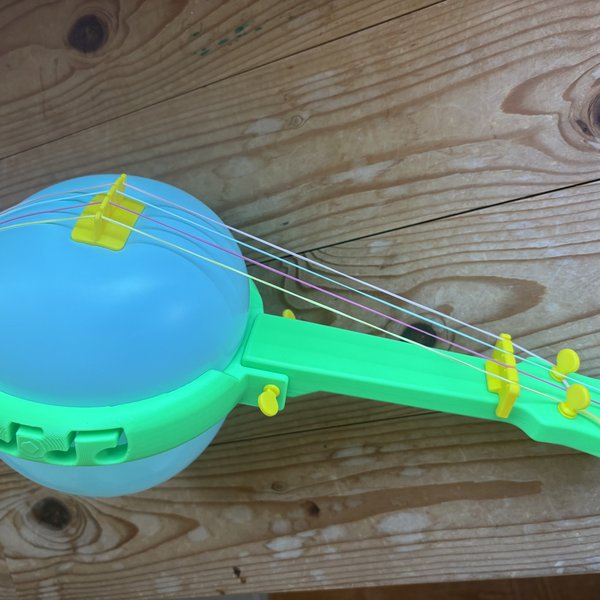
The Balloon Banjo is a fun, hands-on musical instrument that lets you explore how sound and vibration work. The main body of the instrument uses a round party balloon stretched tight to act as a sound box, similar to the drum skin of a real banjo. When you inflate the balloon, the rubber skin becomes taut and springy. Across this stretched balloon surface, you place two bridges that support strings made of fishing line or nylon. The strings are held securely in place by a neck, flanges, and seven tuning pegs. When you pluck or strum the strings, they vibrate back and forth. These vibrations travel down through the bridges and into the stretched balloon skin. Because the balloon is inflated and under tension, it amplifies these tiny vibrations, turning them into louder, audible sound waves that travel through the air to your ears. You can even change the pitch or tuning of the notes by adjusting the pegs to tighten or loosen the strings, or by changing how much air is in the balloon, which alters the tension of the sound box itself.
Why Build This
Build your own working musical instrument to play songs and make music with friends.
Discover how sound waves, vibrations, and acoustics work using a fun balloon sound box.
Practice hands-on crafting and assembly skills by putting together printed parts and strings.
Real-World Application
STEM education tool for teaching acoustics, resonance, and material science to children through hands-on musical instrument building.
Skills You'll Learn
acoustic resonance
string tension tuning
basic mechanical assembly
material science basics
Safety Precautions
Supervision recommended for children when handling small parts, strings, and balloons.
Technology Tags
3D PRINTING
PLA
ACOUSTIC RESONANCE
MUSICAL INSTRUMENT DESIGN
STEM EDUCATION
Frequently Asked Questions
No, this is a purely acoustic analog project that does not use any electronics, circuits, or software.
You can turn the pegs to tighten or loosen the nylon strings, which changes their pitch, or adjust the air pressure inside the balloon resonator.
Yes! Any standard round party balloon can be used as a replacement sound box once it is inflated and secured.
Gallery
This page is part of Kitkraft's Project Hub — a curated collection of electronics & robotics projects gathered from the maker community to help students and hobbyists discover and learn to build. Kitkraft does not claim authorship of the original project, and makes no representation as to the accuracy, completeness or safety of third-party source material. The summary and "How It Works" explanation above are AI-generated, rewritten with reference to the original tutorial — not a reproduction of it. Full credit and a direct link to the original source are provided above. If you're the original creator and have a concern about how your work is represented here, please contact us and we'll address it promptly.
Kitkraft Project Hub — curated from the maker community, credited at the source.