Project Hub
/Artificial Intelligence & Edge ML/Edge AI & TinyML/Identify Leaking Gear Box By Edge Impulse
Advanced
AI / ML
> ₹15,000
6 – 12 Hours
Partial Kit
Identify Leaking Gear Box By Edge Impulse
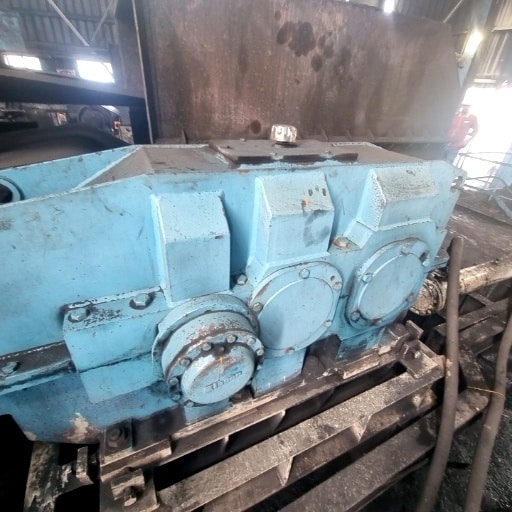
An AI-powered project utilizing Edge Impulse to automatically identify leaking gearboxes in industrial coal handling plants and raise alarms or stop machinery.
We stock the boards, sensors and modules this project needs. A full parts list is coming soon — for now, browse our DIY Kits & components or search for AI / ML parts.
This project is sourced from another site, not written by us — this list is our best match of their components against what we stock, not a verified bill of materials. Always check the original blog (linked above) for the actual parts list before buying.
We don't carry yet: Sensor (unspecified)
Generic microcontroller (unspecified)
Enclosure / Box / Case
The Identify Leaking Gear Box By Edge Impulse project operates by deploying a machine learning model directly onto an edge device or microcontroller to monitor industrial gearboxes for signs of fluid leaks. The system begins by interfacing with specialized sensors placed strategically around the industrial gearbox setup within a coal handling plant environment. These sensors continuously capture physical operational data—such as vibration patterns, acoustic signatures, or visual indicators depending on the sensor type—and feed this raw telemetry into the compatible microcontroller or edge device. Prior to deployment, an advanced TinyML classification model is trained using Edge Impulse on datasets representing both normal operational states and failure states associated with gearbox leaks. Once flashed onto the hardware, the microcontroller executes real-time inference on the incoming sensor streams without needing constant cloud connectivity. When the machine learning algorithm detects patterns that cross a high-confidence threshold for a leak, the edge device triggers automated responses, which can include sounding an alarm, displaying a warning indicator, or interfacing with industrial control systems to safely stop the heavy machinery before catastrophic failure occurs.
Why Build This
Develop practical experience in deploying TinyML classification models onto resource-constrained microcontrollers for industrial predictive maintenance.
Implement automated real-time fault detection systems capable of preventing catastrophic equipment failure and costly downtime in heavy industrial environments.
Gain hands-on engineering competence in integrating edge AI pipelines with industrial sensors and mechanical systems.
Real-World Application
Predictive maintenance and leak detection in heavy industrial gearboxes within thermal power plants, manufacturing units, and conveyor systems.
Skills You'll Learn
Edge ML model training
TinyML deployment
sensor data acquisition
real-time inference optimization
industrial predictive maintenance implementation
Safety Precautions
Ensure proper Lockout/Tagout (LOTO) procedures are followed when inspecting or installing sensors near heavy rotating machinery and high-voltage industrial equipment.
Technology Tags
ARTIFICIAL INTELLIGENCE
MACHINE LEARNING
EDGE IMPULSE
PREDICTIVE MAINTENANCE
INDUSTRIAL AUTOMATION
Frequently Asked Questions
You can use various sensors compatible with your edge device, such as accelerometers for vibration analysis or microphones for acoustic monitoring, depending on how you choose to train your Edge Impulse model to detect the leak.
No, once the trained machine learning model from Edge Impulse is flashed onto the microcontroller or edge device, it performs real-time inference locally at the edge without requiring cloud connectivity.
The microcontroller running the edge AI model can utilize its digital or analog output pins to interface with external relays, industrial PLCs, or alarm buzzers when a leak signature is classified with high confidence.
Gallery
This page is part of Kitkraft's Project Hub — a curated collection of electronics & robotics projects gathered from the maker community to help students and hobbyists discover and learn to build. Kitkraft does not claim authorship of the original project, and makes no representation as to the accuracy, completeness or safety of third-party source material. The summary and "How It Works" explanation above are AI-generated, rewritten with reference to the original tutorial — not a reproduction of it. Full credit and a direct link to the original source are provided above. If you're the original creator and have a concern about how your work is represented here, please contact us and we'll address it promptly.
Kitkraft Project Hub — curated from the maker community, credited at the source.