We stock the boards, sensors and modules this project needs. A full parts list is coming soon — for now, browse our DIY Kits & components or search for ESP32 parts.
This project is sourced from another site, not written by us — this list is our best match of their components against what we stock, not a verified bill of materials. Always check the original blog (linked above) for the actual parts list before buying.
We don't carry yet: Drone Parts (ESC / propeller / flight controller / BLDC)
LED Strip / NeoPixel / WS2812
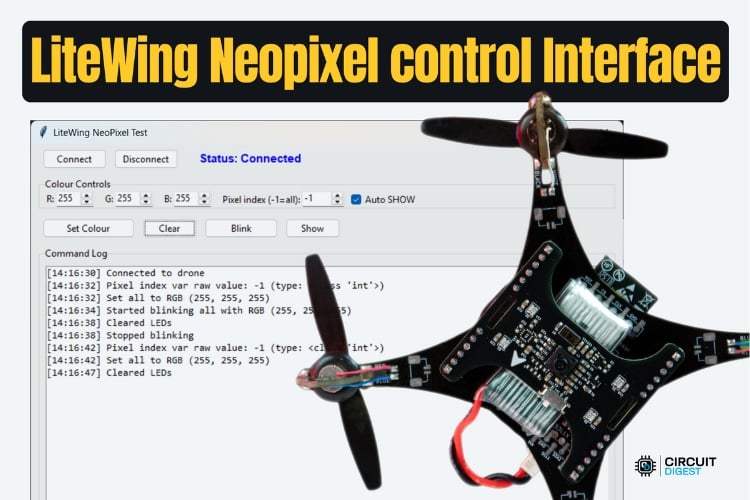
The LiteWing Flight Positioning Module NeoPixel Status Control system operates by leveraging a computer with Wi-Fi capability to communicate wirelessly with an ESP32 DevKit v1 or compatible microcontroller running on the LiteWing Drone platform. At the core of the system are the integrated WS2812B NeoPixel LEDs located directly on the flight positioning module. These addressable LEDs allow for individual color and brightness control over a single data line using precision timing protocols. To manage this hardware, the setup utilizes a software stack running Python, the cflib communication library, and the dedicated LiteWing Python SDK. When a user runs the test_neopixel.py script from their computer, commands are formatted into CRTP (CrazyFlie Real-Time Protocol) packets and transmitted via Wi-Fi to the drone's flight controller. The microcontroller interprets these incoming telemetry and control instructions, subsequently generating the proper data stream required to drive the WS2812B LEDs. As a result, the onboard NeoPixels dynamically update their color patterns and illumination states based on the executed script, providing real-time visual feedback directly from the drone's positioning hardware.
Why Build This
Implement visual flight status indicators and telemetry feedback loops for autonomous aerial vehicles.
Learn how to integrate high-level Python GUI controls with low-level addressable LED hardware protocols on an ESP32 architecture.
Develop optical debugging techniques to visually monitor state changes and diagnostic data during drone development.
Real-World Application
Visual flight status indication, telemetry feedback, and optical debugging for drones and autonomous aerial vehicles.
Skills You'll Learn
Addressable LED data protocols
wireless packet communication
Python SDK integration
telemetry visualization
embedded hardware debugging
Safety Precautions
Ensure the drone's propellers are detached or secure before testing custom firmware and LED command scripts indoors.
Technology Tags
PYTHON
WS2812B
NEOPIXEL
CRTP
GUI
DRONE
LEDS
EMBEDDED SYSTEMS
FIRMWARE
Frequently Asked Questions
They serve as programmable status indicators that provide real-time visual feedback for telemetry, debugging, and flight modes.
The computer uses Wi-Fi connectivity and the LiteWing Python SDK to transmit CRTP command packets to the drone's microcontroller.
Yes, you need a Python environment configured with the cflib library, the LiteWing Python SDK, and the specific test_neopixel.py script.
Gallery
This page is part of Kitkraft's Project Hub — a curated collection of electronics & robotics projects gathered from the maker community to help students and hobbyists discover and learn to build. Kitkraft does not claim authorship of the original project, and makes no representation as to the accuracy, completeness or safety of third-party source material. The summary and "How It Works" explanation above are AI-generated, rewritten with reference to the original tutorial — not a reproduction of it. Full credit and a direct link to the original source are provided above. If you're the original creator and have a concern about how your work is represented here, please contact us and we'll address it promptly.
Kitkraft Project Hub — curated from the maker community, credited at the source.