Monitor Live Temperature Using IBM Bluemix and NXP LPC1768
This project demonstrates how to monitor live temperature data using an Mbed NXP LPC1768 development board and publish it to the IBM Bluemix cloud platform via Ethernet.
This project is sourced from another site, not written by us — this list is our best match of their components against what we stock, not a verified bill of materials. Always check the original blog (linked above) for the actual parts list before buying.
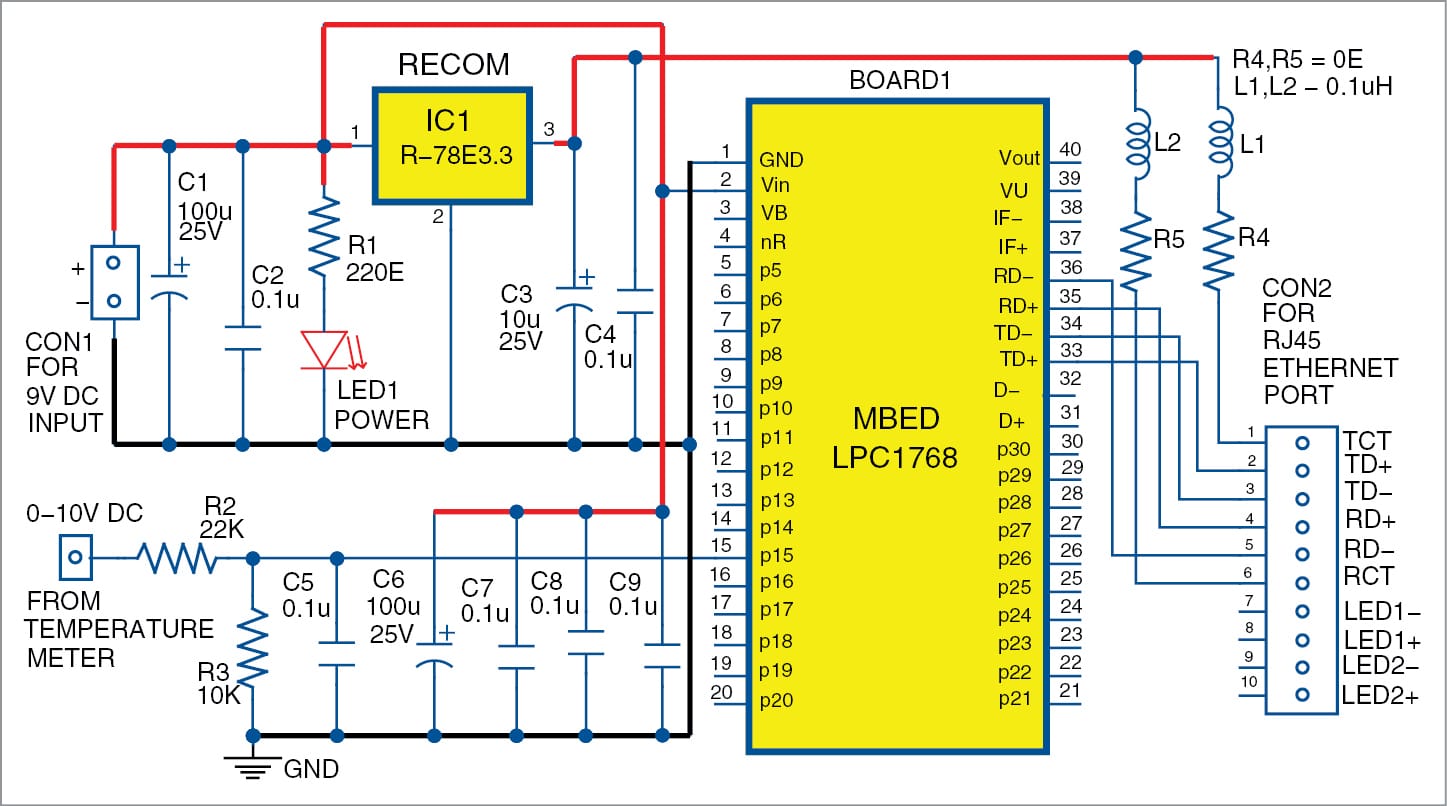
This system operates by capturing physical temperature data and transmitting it to a cloud platform for live monitoring. At the front end, a PT100 temperature sensor measures the thermal state, which is then processed by a temperature meter (such as a SELEC-make unit) to produce a proportional analog voltage signal ranging from 0V to 10V DC. This analog voltage signal is routed into the Mbed NXP LPC1768 development board, where the microcontroller's analog-to-digital converter (ADC) reads the voltage level and translates it into a digital temperature value. The Mbed NXP LPC1768 board is programmed using the Mbed online IDE to format this temperature data into network packets. Utilizing an RJ45 Ethernet patch cable, the development board connects to a local network, allowing it to communicate with an intermediate PC. Through a Python program running in a DOS command prompt environment, the data packets are successfully routed and published over the internet to the IBM Bluemix cloud platform. Once received in the cloud, the live temperature readings can be visualized and tracked remotely, bridging industrial physical sensing with modern IoT dashboards.
Why Build This
Gain hands-on experience in integrating physical industrial sensors with cloud-based IoT platforms like IBM Bluemix.
Understand the process of reading analog 0V-10V sensor signals using microcontroller ADC pins and converting them to digital network data.
Develop practical skills in networking microcontrollers via Ethernet and writing Python programs to handle live data telemetry.
Real-World Application
Remote industrial temperature monitoring, environmental sensing, and IoT-based smart factory automation.
Skills You'll Learn
Analog-to-digital conversion
Industrial sensor interfacing
Embedded Ethernet networking
Cloud IoT data publishing
Python network programming
Safety Precautions
Ensure correct wiring and voltage levels for the 0V to 10V DC temperature meter output to prevent damage to the microcontroller pins.
Technology Tags
IOT
IBM BLUEMIX
MQTT
ETHERNET
PYTHON
C++
MBED
TEMPERATURE SENSOR
Frequently Asked Questions
No. You must ensure correct wiring and voltage levels, as applying higher voltages directly to microcontroller pins without proper conditioning can permanently damage the board.
The intermediate PC helps test network connectivity using the DOS command prompt and runs the Python program required to facilitate communication between the Mbed board and IBM Bluemix.
No, the project utilizes the Mbed online IDE, which allows you to write, compile, and download your firmware directly from a web browser.
Gallery
This page is part of Kitkraft's Project Hub — a curated collection of electronics & robotics projects gathered from the maker community to help students and hobbyists discover and learn to build. Kitkraft does not claim authorship of the original project, and makes no representation as to the accuracy, completeness or safety of third-party source material. The summary and "How It Works" explanation above are AI-generated, rewritten with reference to the original tutorial — not a reproduction of it. Full credit and a direct link to the original source are provided above. If you're the original creator and have a concern about how your work is represented here, please contact us and we'll address it promptly.
 MB102 Adjustable Breadboard Power Supply Module (3.3V & 5V) for Arduino & Raspberry Pi
Rs. 139.00
 400 Points Mini Solderless Prototype PCB Breadboard High Quality
Rs. 89.00
 Jumper Wire 10 Pin Male To Male 20cm
Rs. 45.00
 Jumper Wire 10 Pin Male To Female 20cm
Rs. 45.00


