Intermediate
ESP8266
₹500 – ₹1,500
3 – 6 Hours
Smart Wearable Ring
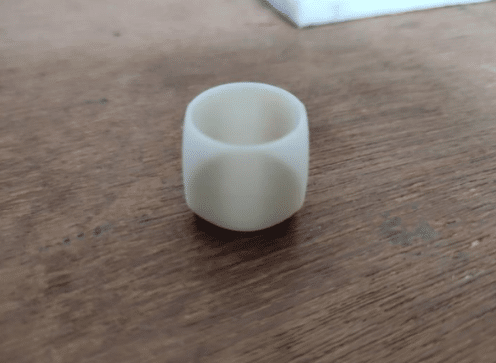
A DIY smart wearable ring that monitors health parameters in real-time and provides an SOS emergency alert feature using an ESP8266 and ThingSpeak cloud platform.
Originally published by Ashwini Sinha on ElectronicsForU
View original tutorial
How It Works
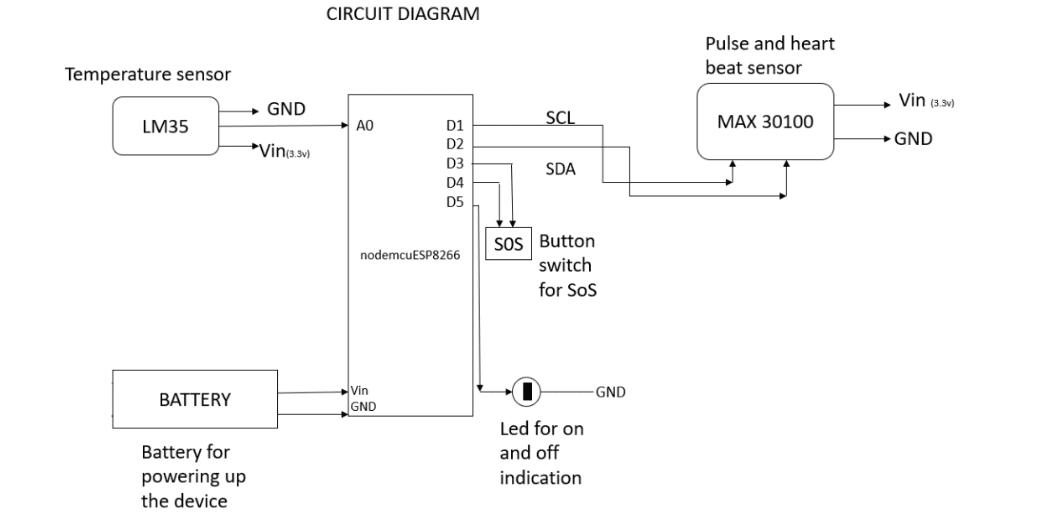
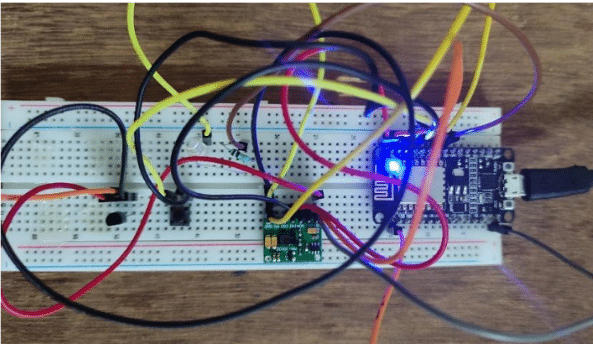
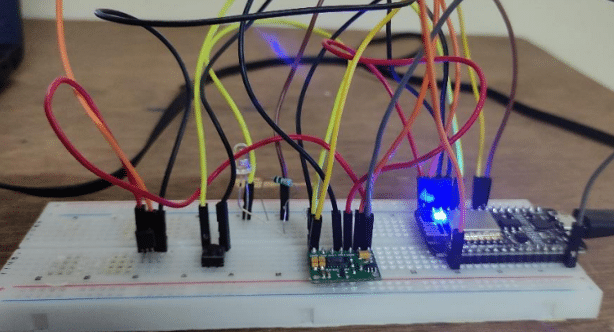
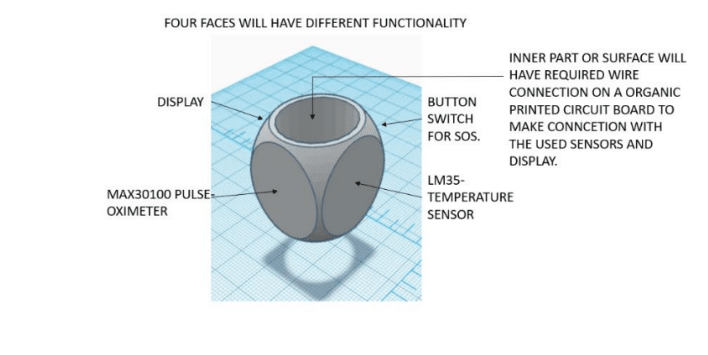
The Smart Wearable Ring is an Internet of Things (IoT) health monitoring device powered by a NodeMCU ESP8266 microcontroller. At the core of the circuit are two primary sensing elements: a MAX30100 pulse oximeter sensor and an LM35 temperature sensor. The MAX30100 utilizes optical sensors—typically red and infrared LEDs combined with a photodetector—to measure blood oxygen saturation levels and heart rate via photoplethysmography (PPG). Simultaneously, the LM35 temperature sensor monitors ambient or skin temperature by outputting an analog voltage linearly proportional to Celsius temperature. The NodeMCU ESP8266 reads data from these sensors, processing the digital and analog inputs. A physical push button is integrated into the circuit to trigger a manual input event, such as an emergency SOS signal, while an LED provides visual status feedback. Utilizing the ESP8266's onboard Wi-Fi capabilities, the microcontroller connects to a wireless network and transmits the gathered biomedical data in real-time to the ThingSpeak cloud platform. Once data reaches ThingSpeak, users can visualize trends, log health parameters, and remotely monitor patient vitals from anywhere with an internet connection, effectively bridging local hardware sensing with remote cloud telemetry.
Why Build This
Design and implement a functional, wearable IoT medical telemetry prototype suitable for remote patient monitoring and telemedicine applications.
Gain hands-on experience integrating multiple distinct sensors (optical I2C and analog) with a Wi-Fi-enabled microcontroller.
Develop cloud-connected embedded software that transmits real-time physiological data to an IoT dashboard for remote tracking and emergency alerting.
Real-World Application
Remote patient health monitoring, elderly care, and emergency SOS safety alerting systems.
Skills You'll Learn
I2C communication protocol
analog-to-digital conversion
Wi-Fi data transmission via ESP8266
cloud IoT dashboard integration with ThingSpeak
sensor data acquisition and filtering
GPIO interrupt and push button handling
Safety Precautions
Ensure proper wiring and stable power supply connections to avoid short circuits.
Technology Tags
ESP8266
NODEMCU
IOT
THINGSPEAK
HEALTH MONITORING
PULSE OXIMETER
MAX30100
LM35 TEMPERATURE SENSOR
WEARABLE TECHNOLOGY
Ready to build this?
We stock the boards, sensors and modules this project needs. A full parts list is coming soon — for now, browse our DIY Kits & components or search for ESP8266 parts.
Frequently Asked Questions
How does the MAX30100 sensor measure heart rate and blood oxygen?
The MAX30100 shines red and infrared light through the tissue and measures the amount of light reflected back to a photodetector. Changes in light absorption caused by pulsating blood flow allow the system to calculate pulse rate and blood oxygen saturation (SpO2).
Can the NodeMCU ESP8266 connect to any standard Wi-Fi network?
Yes, the ESP8266 supports standard 2.4 GHz Wi-Fi networks (802.11 b/g/n). You will need to hardcode your router's SSID and password into the Arduino IDE code so the device can connect to the internet.
How is the ring powered during operation?
The project uses a 5V battery to provide portable power to the breadboard and components, allowing the circuit to function as a wearable device rather than remaining tethered to a USB port.
Gallery

Kitkraft Project Hub — curated from the maker community, credited at the source.
PRJ-00591