Project Hub
/Audio Displays & Interactive Media/LED Matrix & Cube Displays/Transformers on Retro Game Consoles
Advanced
ANALOG / DISCRETE
Project Specific
> 3 Days
Partial Kit
Transformers on Retro Game Consoles
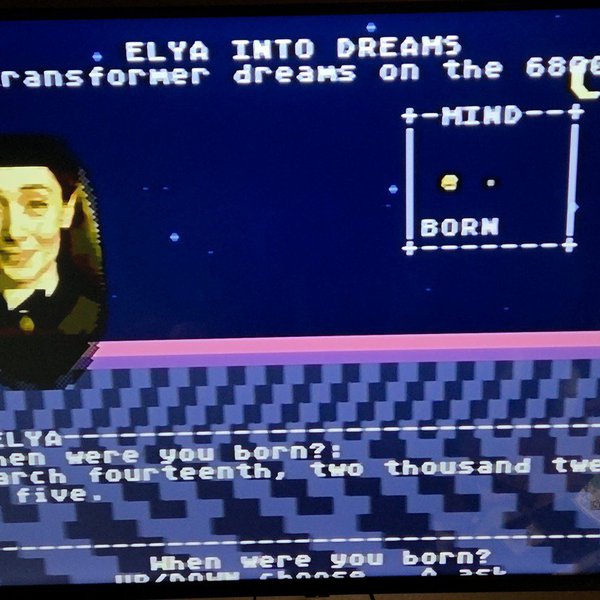
This project documents porting real transformer language models to retro game consoles like the NES, SNES, Genesis, N64, and Game Boy Color, measuring actual cycle performance.
We stock the boards, sensors and modules this project needs. A full parts list is coming soon — for now, browse our DIY Kits & components or search for Analog / Discrete parts.
This project is sourced from another site, not written by us — this list is our best match of their components against what we stock, not a verified bill of materials. Always check the original blog (linked above) for the actual parts list before buying.
We don't carry yet: Other Dev Board (Indusboard / Maixduino / misc)
Nintendo NES
Super Nintendo
Nintendo 64
Game Boy Color
Flash carts
This advanced engineering project involves porting real transformer language models to operate on legacy hardware architectures including the Nintendo NES, Super Nintendo, Sega Genesis, Nintendo 64, and Game Boy Color. Because these vintage systems feature severely constrained memory, lack floating-point units, and run on heavily restricted CPU clock speeds, running modern neural network inference requires extreme optimization. The system leverages flash carts to load custom software payloads containing stripped-down, quantized transformer architectures onto the retro hardware. Using tools like MAME, ares, PyBoy, and SameBoy alongside custom measurement harnesses, engineers can emulate, profile, and measure the actual cycle-by-cycle performance of the console processors. The execution relies on translating matrix multiplications and attention mechanisms into fixed-point arithmetic or lookup tables that legacy 8-bit, 16-bit, and 64-bit processors can handle. By pushing these vintage architectures far beyond their original design parameters, the system evaluates how machine learning workloads behave under extreme hardware constraints, yielding precise empirical data on instruction execution times and memory bottlenecks.
Why Build This
Explore the fundamental limits of edge machine learning by running transformer models on severely constrained legacy microprocessors.
Gain hands-on experience with fixed-point arithmetic, custom profiling tools, and cycle-accurate hardware emulation.
Evaluate real-world performance metrics of vintage architectures like the NES, SNES, Genesis, N64, and Game Boy Color under heavy computational loads.
Real-World Application
Optimizing edge machine learning workloads for extremely constrained legacy or embedded processors.
Skills You'll Learn
Fixed-point optimization
legacy hardware profiling
emulator instrumentation
memory constraint management
low-level performance benchmarking
custom measurement harness design
Safety Precautions
Flagged during content review — not in the original source
Modifying legacy hardware using custom flash carts and measurement harnesses carries a risk of electrical overstress or short circuits; ensure all power is disconnected before installing cartridges and verify current draws to protect vintage console components.
Technology Tags
TRANSFORMERS
MACHINE LEARNING
LANGUAGE MODELS
QUANTIZATION
TERNARY WEIGHTS
ASSEMBLY
RETROCOMPUTING
EMULATION
Frequently Asked Questions
No, this project requires flash carts to load the custom software payloads and compiled transformer model code onto the retro consoles.
Physical modifications depend on the specific measurement harness used, but many implementations rely on flash carts and external monitoring tools connected via standard cartridge slots or controller ports.
Testing on these extremely constrained platforms provides extreme benchmarks for edge machine learning optimization, helping engineers understand how to run complex algorithms on ultra-low-power embedded systems.
Gallery
This page is part of Kitkraft's Project Hub — a curated collection of electronics & robotics projects gathered from the maker community to help students and hobbyists discover and learn to build. Kitkraft does not claim authorship of the original project, and makes no representation as to the accuracy, completeness or safety of third-party source material. The summary and "How It Works" explanation above are AI-generated, rewritten with reference to the original tutorial — not a reproduction of it. Full credit and a direct link to the original source are provided above. If you're the original creator and have a concern about how your work is represented here, please contact us and we'll address it promptly.
Kitkraft Project Hub — curated from the maker community, credited at the source.