This project is sourced from another site, not written by us — this list is our best match of their components against what we stock, not a verified bill of materials. Always check the original blog (linked above) for the actual parts list before buying.
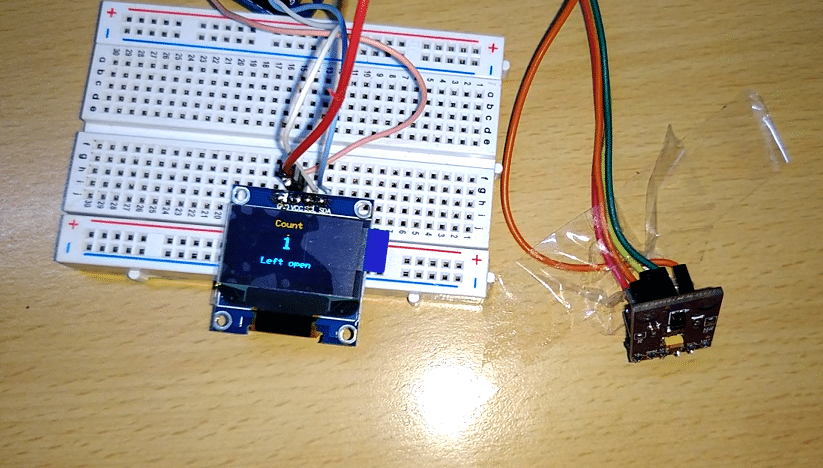
The Visitor Counter Using RGB APDS-9960 functions by combining optical sensing, microcontroller logic, and audio-visual signaling to track room occupancy. At the heart of the system is the APDS-9960 sensor, which utilizes an integrated infrared LED and photodiodes to detect ambient light, color, and proximity gestures through reflected light. When a person passes by or waves near the sensor, the device measures the change in light reflection and translates this interaction into an event trigger. The Arduino board, connected via a designated communication interface, continuously polls the sensor to monitor these movement events. An internal software counter running on the Arduino increments with every verified entry detection. The system compares the current visitor count against a predefined threshold limit stored in the microcontroller's memory. As long as the count remains below this limit, the system operates normally, keeping track of traffic. However, the moment the visitor count exceeds the established threshold, the Arduino executes a conditional statement that outputs a control signal to a buzzer. This audible alarm alerts supervisors or operators that maximum capacity has been reached. Powering the entire system requires a stable 5V power supply connected to the Arduino board, which in turn distributes operational voltage to the sensor and buzzer through secure connecting wires. By programming the Arduino IDE using the SparkFun APDS9960 library, developers can fine-tune the detection sensitivity and customize the occupancy threshold to suit specific environment requirements.
Why Build This
Design automated capacity management systems for undergraduate lab spaces, lecture halls, or campus events.
Implement real-time threshold monitoring and alarm logic using microcontroller-based digital I/O.
Gain practical experience integrating specialized I2C optical sensors with embedded platforms for physical computing applications.
Real-World Application
Managing room capacity, preventing unauthorized gate-crashing at events, and enhancing home security against intruders.
Skills You'll Learn
I2C communication protocol
optical sensor integration
digital threshold logic
interrupt handling
microcontroller programming
Safety Precautions
Crosscheck all electrical connections before powering the circuit to prevent damaging the development board or components.
Technology Tags
ARDUINO
APDS-9960 GESTURE SENSOR
BUZZER
C++
SENSORS
Frequently Asked Questions
It uses an integrated infrared emitter and photodiodes to measure the amount of light reflected back when a person moves within its detection field.
The Arduino processes the condition and triggers the buzzer to sound an audible alarm indicating that the capacity threshold has been reached.
Yes, the maximum visitor limit can be modified directly within the Arduino source code prior to uploading it to the board via the Arduino IDE.
Gallery
This page is part of Kitkraft's Project Hub — a curated collection of electronics & robotics projects gathered from the maker community to help students and hobbyists discover and learn to build. Kitkraft does not claim authorship of the original project, and makes no representation as to the accuracy, completeness or safety of third-party source material. The summary and "How It Works" explanation above are AI-generated, rewritten with reference to the original tutorial — not a reproduction of it. Full credit and a direct link to the original source are provided above. If you're the original creator and have a concern about how your work is represented here, please contact us and we'll address it promptly.
 Piezo Buzzer (Big) 6-12V
Rs. 45.00
 Jumper Wire 10 Pin Male To Male 20cm
Rs. 45.00
 MB102 Adjustable Breadboard Power Supply Module (3.3V & 5V) for Arduino & Raspberry Pi
Rs. 139.00
 400 Points Mini Solderless Prototype PCB Breadboard High Quality
Rs. 89.00
 Jumper Wire 10 Pin Male To Female 20cm
Rs. 45.00


