Wireless Charging Circuit For Micro Sized Wearable Earbuds And Devices
A compact DIY wireless charging circuit designed using a tiny inductor coil and voltage regulator to power micro-sized wearable devices like earbuds and smartwatches.
This project is sourced from another site, not written by us — this list is our best match of their components against what we stock, not a verified bill of materials. Always check the original blog (linked above) for the actual parts list before buying.
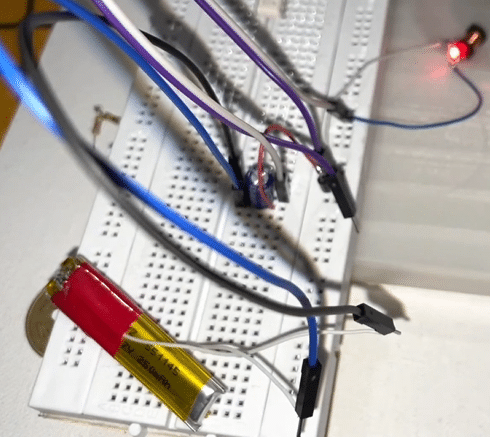
This wireless charging circuit operates through inductive power transfer, utilizing a miniature transmitter and a matching receiver setup designed for micro-sized wearables. At the heart of the receiver side is an ultra-small 3mm inductor coil that magnetically couples with the alternating magnetic field generated by the wireless charger transmitter. When the transmitter induces an alternating current in this 3mm coil, the raw electrical energy must be stabilized before it can safely charge the onboard power source. This is where the NCP1402 voltage regulator comes into play, stepping and regulating the voltage to a consistent, usable level tailored for a small battery integrated into the wearable device. Because space is severely constrained in micro-form-factor electronics like earbuds, the circuit incorporates minimal supporting components, including an LED to provide visual feedback on power status and charging activity. Through this combination of electromagnetic induction, precise voltage regulation, and efficient power management, the circuit safely replenishes the miniature battery without requiring any physical wired connection.
Why Build This
Design and optimize ultra-compact power delivery networks for space-constrained micro-scale engineering applications.
Integrate inductive power transfer principles into custom wearable prototypes like smartwatches and Bluetooth earbuds.
Implement discrete step-up voltage regulation using the NCP1402 IC to reliably charge miniature batteries from low-voltage harvested sources.
Real-World Application
Enabling retrofitted or built-in wireless charging capabilities for small form-factor wearables, Bluetooth earbuds, smartwatches, and miniature IoT devices.
Skills You'll Learn
Inductive power transfer design
voltage regulation
miniature component PCB layout
power management for wearables
discrete analog circuit analysis
Safety Precautions
Flagged during content review — not in the original source
Exercise caution when handling and charging lithium-based batteries in miniature wearable devices; improper voltage regulation or short circuits can lead to thermal runaway or battery rupture.
Technology Tags
WIRELESS CHARGING
INDUCTIVE CHARGING
WEARABLES
POWER MANAGEMENT
NCP1402
MICRO ELECTRONICS
COILS
EMF
Frequently Asked Questions
A 3mm coil is specifically chosen to fit within the extremely tight physical constraints of micro-sized wearable devices like earbuds, where standard-sized coils would be too bulky.
The NCP1402 takes the fluctuating or low-level voltage induced by the wireless receiver coil and regulates it to a steady, usable output required to safely charge the small onboard battery.
While the 3mm coil relies on standard electromagnetic induction, efficiency and coupling depend heavily on the operating frequency and magnetic field strength generated by the specific transmitter used.
Gallery
This page is part of Kitkraft's Project Hub — a curated collection of electronics & robotics projects gathered from the maker community to help students and hobbyists discover and learn to build. Kitkraft does not claim authorship of the original project, and makes no representation as to the accuracy, completeness or safety of third-party source material. The summary and "How It Works" explanation above are AI-generated, rewritten with reference to the original tutorial — not a reproduction of it. Full credit and a direct link to the original source are provided above. If you're the original creator and have a concern about how your work is represented here, please contact us and we'll address it promptly.
 10pcs 5mm RED Diffused Light Emitting Diodes - LEDs Set
Rs. 39.00
 MB102 Adjustable Breadboard Power Supply Module (3.3V & 5V) for Arduino & Raspberry Pi
Rs. 139.00
 400 Points Mini Solderless Prototype PCB Breadboard High Quality
Rs. 89.00
 Jumper Wire 10 Pin Male To Male 20cm
Rs. 45.00
 Jumper Wire 10 Pin Male To Female 20cm
Rs. 45.00


