Project Hub/Audio Displays & Interactive Media/LED Matrix & Cube Displays/10 Million Colours In One: Amazing IoT Light For Christmas Decorations
Intermediate
ESP8266
Project Specific
3 – 6 Hours
10 Million Colours In One: Amazing IoT Light For Christmas Decorations
Build a smart IoT RGB lighting system that radiates millions of color combinations wirelessly controlled via Wi-Fi from any digital device.
Originally published by EFY Bureau on ElectronicsForU
View original tutorial
How It Works
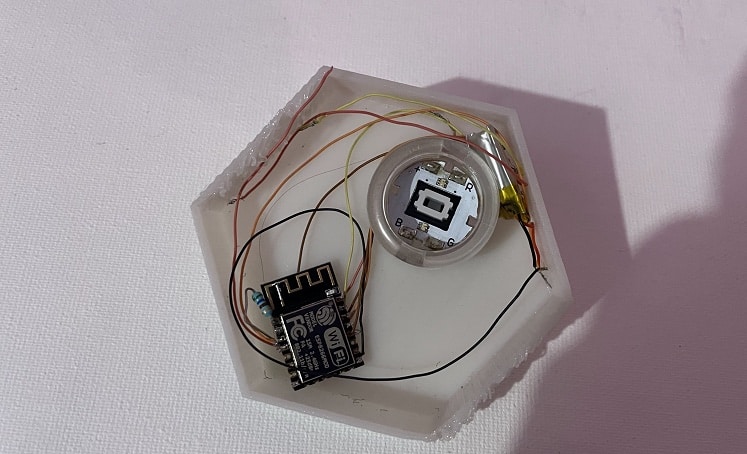
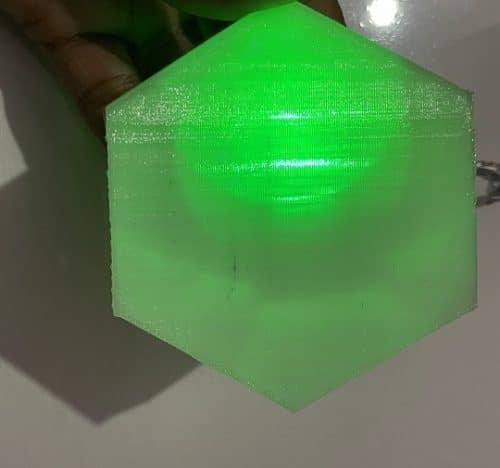
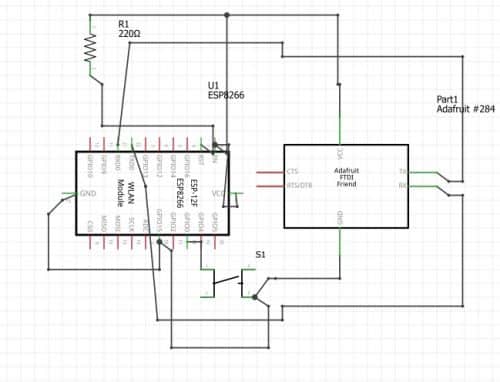
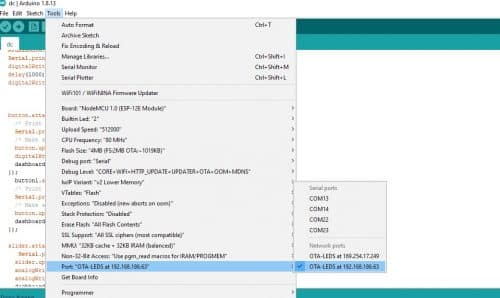
This IoT lighting system is built around an ESP8266 (ESP-12F) microcontroller module hosted on a NodeMCU board, which acts as the central processing and Wi-Fi communication hub. The board receives wireless control signals over a local network, allowing a user to adjust color patterns remotely from any digital device. To create the vast spectrum of hues, the microcontroller outputs Pulse-Width Modulation (PWM) signals to control the individual channels of the RGB LEDs. By rapidly varying the duty cycle of the red, green, and blue components, the system blends the light output to produce millions of distinct color combinations. Power is supplied to the circuit via a dedicated power source or battery, ensuring the board and LEDs receive stable operating voltage. Mechanically, the entire electronics assembly is housed inside a custom 3D printed hexagonal enclosure, which diffuses the light and protects the internal wiring. Software-wise, the project is programmed using the Arduino IDE, incorporating an Over-The-Air (OTA) update library so that firmware can be updated wirelessly without needing a physical USB connection to the board every time.
Why Build This
Design and assemble a custom 3D printed IoT enclosure that houses microcontroller hardware and power supplies for smart home deployments.
Implement wireless Over-The-Air (OTA) firmware updates to modify lighting behavior without physical USB tethering.
Program the ESP8266 Wi-Fi module using the Arduino IDE to create a network-accessible lighting node capable of rendering millions of color combinations.
Real-World Application
Smart home holiday decorations, customizable ambient accent lighting, and remote-controlled IoT lighting displays.
Skills You'll Learn
Microcontroller programming
Wi-Fi network integration
Pulse-Width Modulation (PWM) color mixing
Over-The-Air (OTA) firmware flashing
3D printed enclosure integration
power management for LED displays
Safety Precautions
No specific precautions noted for this build — always follow general electronics safety practices.
Technology Tags
IOT
WI-FI
RGB LED
OVER-THE-AIR (OTA) FIRMWARE UPDATE
ARDUINO IDE
3D PRINTING
Ready to build this?
We stock the boards, sensors and modules this project needs. A full parts list is coming soon — for now, browse our DIY Kits & components or search for ESP8266 parts.
Frequently Asked Questions
Do I need a physical USB cable connected to reprogram the device every time?
No. By utilizing the integrated OTA (Over-The-Air) library, you can push new code updates wirelessly over your local Wi-Fi network once the initial program is flashed.
How are millions of colors generated using standard RGB LEDs?
The ESP8266 uses Pulse-Width Modulation (PWM) to rapidly switch the red, green, and blue diode channels on and off at varying duty cycles, blending the intensities to create millions of unique color shades.
Can I control this lighting system from my smartphone or computer?
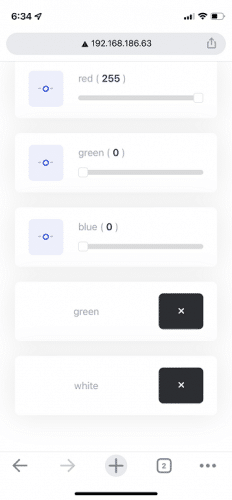
Yes, because the ESP8266 connects to your local wireless network, any digital device with a web browser or compatible interface on the same network can send commands to change the colors.
Gallery

Kitkraft Project Hub — curated from the maker community, credited at the source.
PRJ-00487