Building GPS Based Real Time Trajectory Tracking Device
Learn how to build a real-time GPS trajectory tracking device that receives and stores location data using a GPS module, FTDI or Bluetooth, and mapping software.
This project is sourced from another site, not written by us — this list is our best match of their components against what we stock, not a verified bill of materials. Always check the original blog (linked above) for the actual parts list before buying.
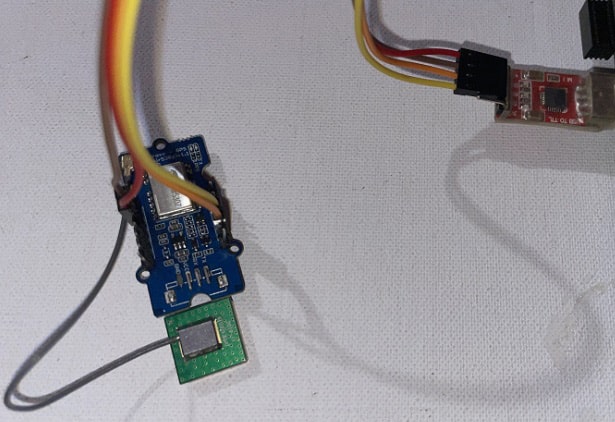
The Building GPS Based Real Time Trajectory Tracking Device operates by capturing geographical coordinate data from the surrounding environment and transmitting it to a computer for visualization and analysis. At the core of the system is the AIR530 GPS module, which acts as the primary receiver. This module utilizes an internal antenna and satellite communication to triangulate global positioning data, including latitude, longitude, velocity, and time coordinates. To maintain system time and configuration parameters when power is cycled, a mini CR3.3V battery is integrated into the circuit to serve as a real-time clock backup and memory keeper. Once the GPS module acquires a valid satellite fix, the raw serial data stream must be routed externally. This is accomplished using either an FTDI module for wired USB-to-serial communication or a Bluetooth HC05 module for wireless data transmission to a host PC or laptop. On the receiving end, specialized software packages such as Verios, SIM COM, and U-BLOX (U_centre) interpret the incoming NMEA sentence data streams. The U-BLOX software specifically allows engineers and undergraduate researchers to visualize the live trajectory, map the coordinates, and log the spatial path over time for technical evaluation.
Why Build This
Develop practical undergraduate-level engineering experience in integrating global positioning hardware with serial communication interfaces for real-time asset tracking.
Gather live spatial data and trajectory paths to test and validate autonomous vehicle algorithms, robotics navigation, and drone pathing.
Gain hands-on proficiency in configuring and troubleshooting NMEA data streams using industry-standard mapping and diagnostic software suites.
Real-World Application
Used in autonomous cars, drones, and robots for path tracking, detecting road curves and slopes, and gathering navigation data for algorithmic analysis.
Skills You'll Learn
GPS satellite acquisition
NMEA data parsing
UART serial communication
wireless Bluetooth module configuration
PC-to-controller data logging
trajectory mapping and visualization
Safety Precautions
No specific precautions noted for this build — always follow general electronics safety practices.
Technology Tags
GPS
TRAJECTORY TRACKING
SERIAL COMMUNICATION
USART
FTDI
BLUETOOTH
U-BLOX
SIM COM
NAVIGATION
Frequently Asked Questions
Yes, both modules serve to bridge the GPS module's serial output to your PC or laptop. The FTDI module provides a wired USB connection, while the HC05 provides a wireless serial link, allowing you to choose based on whether mobility or wired reliability is needed for your test setup.
The CR3.3V battery functions as a backup power source for the GPS module's internal real-time clock and ephemeris data memory, ensuring faster satellite re-acquisition times when the main power is turned off and on again.
U-BLOX (U_centre) is typically the primary software used for viewing GPS data streams and satellite constellations from modules like the AIR530, while Verios and SIM COM are utilized depending on your specific telemetry logging and communication requirements.
Gallery
This page is part of Kitkraft's Project Hub — a curated collection of electronics & robotics projects gathered from the maker community to help students and hobbyists discover and learn to build. Kitkraft does not claim authorship of the original project, and makes no representation as to the accuracy, completeness or safety of third-party source material. The summary and "How It Works" explanation above are AI-generated, rewritten with reference to the original tutorial — not a reproduction of it. Full credit and a direct link to the original source are provided above. If you're the original creator and have a concern about how your work is represented here, please contact us and we'll address it promptly.
 USB to UART/ESP8266 Adapter Programmer for ESP-01 WiFi Modules with CH340G Chip
Rs. 99.00
 Jumper Wire 10 Pin Male To Male 20cm
Rs. 45.00
 400 Points Mini Solderless Prototype PCB Breadboard High Quality
Rs. 89.00
 MB102 Adjustable Breadboard Power Supply Module (3.3V & 5V) for Arduino & Raspberry Pi
Rs. 139.00
 Jumper Wire 10 Pin Male To Female 20cm
Rs. 45.00


