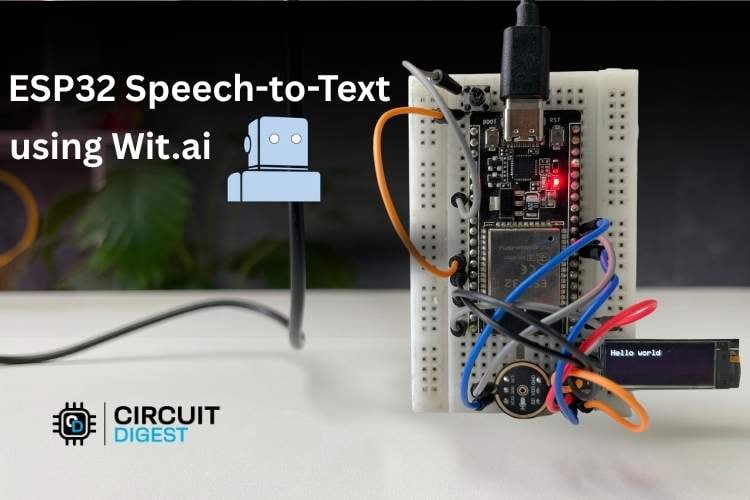
ESP32 Speech-to-Text using Wit.ai
Build an ESP32 speech-to-text system using an I2S microphone to capture audio, streaming it over Wi-Fi to the Wit.ai cloud API for speech recognition and displaying the translated text on an OLED screen.
Parts You'll Need
This project is sourced from another site, not written by us — this list is our best match of their components against what we stock, not a verified bill of materials. Always check the original blog (linked above) for the actual parts list before buying.
-
 ESP32 WiFi+Bluetooth CP2102 Development Board
Rs. 520.00
-
 Microphone module - Analog Sound Sensor Module for Arduino
Rs. 63.00
-
 2-Slot 18650 Holder with Protective Cover and On/Off Switch – Case
Rs. 109.00
-
 0.96 Inch I2C/IIC 4pin OLED Display Module White
Rs. 349.00
-
 MB102 Adjustable Breadboard Power Supply Module (3.3V & 5V) for Arduino & Raspberry Pi
Rs. 139.00
-
 Jumper Wire 10 Pin Male To Male 20cm
Rs. 45.00
-
 1200mAh 18650 Li-ion Bat – Reliable 3.7V Power Cell
Rs. 129.00
-
 400 Points Mini Solderless Prototype PCB Breadboard High Quality
Rs. 89.00
-
 Jumper Wire 10 Pin Male To Female 20cm
Rs. 45.00


How It Works
Why Build This
Real-World Application
Skills You'll Learn
Safety Precautions
Technology Tags
Frequently Asked Questions
Gallery
This page is part of Kitkraft's Project Hub — a curated collection of electronics & robotics projects gathered from the maker community to help students and hobbyists discover and learn to build. Kitkraft does not claim authorship of the original project, and makes no representation as to the accuracy, completeness or safety of third-party source material. The summary and "How It Works" explanation above are AI-generated, rewritten with reference to the original tutorial — not a reproduction of it. Full credit and a direct link to the original source are provided above. If you're the original creator and have a concern about how your work is represented here, please contact us and we'll address it promptly.