Project Hub/Test & Measurement Instrumentation/Multimeters, Voltmeters & Ammeters/Power Supply With Digital Volt-Amp Panel Meter
Intermediate
ANALOG / DISCRETE
₹500 – ₹1,500
3 – 6 Hours
Power Supply With Digital Volt-Amp Panel Meter
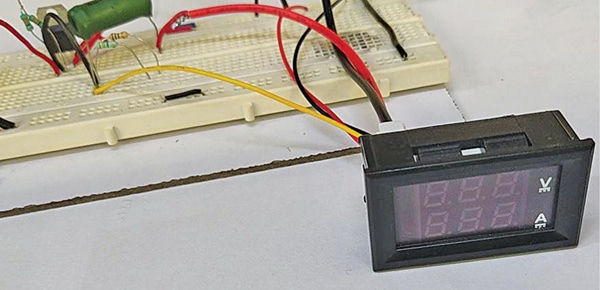
A variable DC power supply featuring an LM317 adjustable voltage regulator and a built-in digital volt-amp panel meter for real-time voltage and current monitoring.
Originally published by Sani Theo on ElectronicsForU
View original tutorial
How It Works
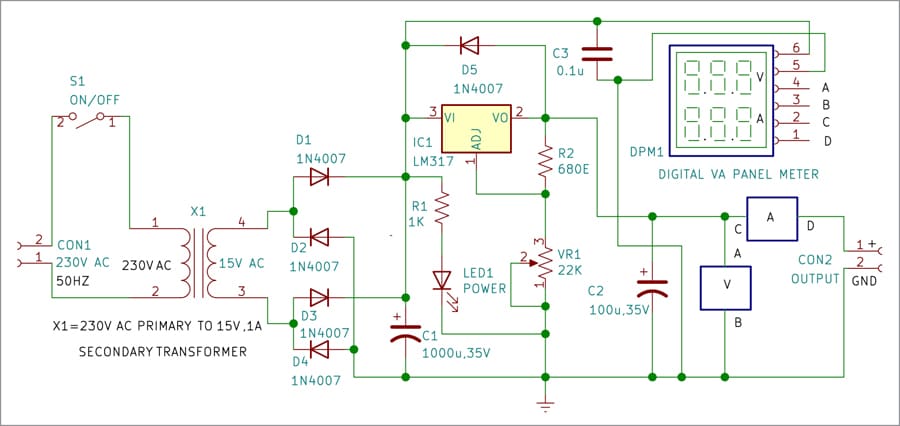
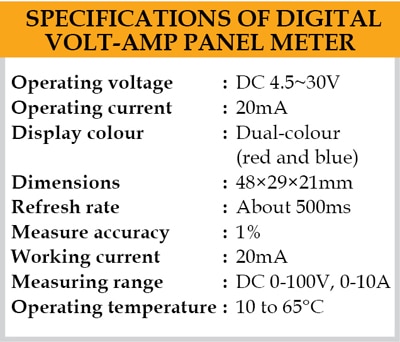
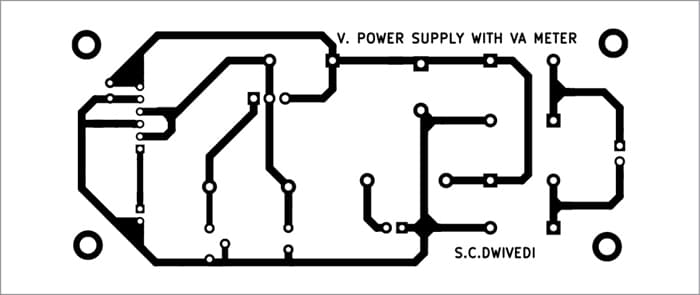
This variable DC power supply project converts high-voltage alternating current into a stable, adjustable direct current output monitored in real time. The circuit begins with a 230V AC primary to 15V 1A secondary transformer (X1), which steps down the high mains voltage to a safer AC level. This stepped-down AC is then fed into a bridge rectifier formed by diodes D1 through D4, converting the alternating current into pulsating DC. Capacitor C1 smooths this pulsating DC into a raw DC voltage bus. The core regulation is handled by the LM317 adjustable voltage regulator (IC1). By adjusting the 22-kilo-ohm variable resistor (VR1) in conjunction with the 680-ohm resistor (R2) connected to its adjustment pin, the output voltage can be precisely controlled across a continuous range. Additional capacitors C2 and C3 improve transient response and output stability. Diode D5 provides reverse-bias protection for the regulator. The output feeds a connected load while simultaneously powering a digital panel meter (DPM1), which provides real-time readouts of both the delivered voltage and current. Finally, LED1 serves as a visual indicator to show when the power supply is active.
Why Build This
Provides an adjustable, regulated DC benchtop power source essential for powering and testing undergraduate-level electronics prototypes and laboratory experiments.
Integrates real-time voltage and current monitoring via a digital panel meter, allowing engineering students to observe load characteristics dynamically.
Offers practical hands-on experience with linear voltage regulation principles, mains-frequency step-down transformation, and rectification.
Real-World Application
Benchtop testing, laboratory experiments, electronics prototyping, and powering various DC electronic circuits requiring adjustable voltage and current monitoring.
Skills You'll Learn
Mains voltage step-down transformation
AC-to-DC bridge rectification
linear voltage regulation design
resistive voltage adjustment
digital panel meter integration
Safety Precautions
Exercise caution when working with 230V AC mains input. Ensure all connections are secure before powering on, and use a suitable heat-sink for the LM317 regulator to prevent overheating.
Technology Tags
LM317
VOLTAGE REGULATOR
BRIDGE RECTIFIER
DIGITAL PANEL METER
PCB DESIGN
BREADBOARD
Ready to build this?
We stock the boards, sensors and modules this project needs. A full parts list is coming soon — for now, browse our DIY Kits & components or search for Analog / Discrete parts.
Frequently Asked Questions
Why is a heat-sink necessary for the LM317 regulator?
The LM317 drops the excess voltage across itself as heat, especially when there is a large difference between the input voltage and a low output voltage, requiring thermal management to prevent overheating.
Can the digital panel meter measure any load current?
The panel meter monitors the current drawn by the load, but the entire power supply is limited by the 1A secondary rating of the transformer (X1).
What is the purpose of diodes D1 through D4?
Diodes D1 through D4 form a bridge rectifier that converts the incoming AC voltage from the transformer secondary into pulsating DC voltage.
Gallery
Kitkraft Project Hub — curated from the maker community, credited at the source.
PRJ-00649