Project Hub/Artificial Intelligence & Edge ML/License Plate Recognition (ANPR)/ROS based Robot for Home Mapping and Positioning
Advanced
RASPBERRY PI
> ₹15,000
6 – 12 Hours
ROS based Robot for Home Mapping and Positioning
Learn how to build a Robot Operating System (ROS) controlled robot equipped with a LiDAR sensor for indoor mapping and autonomous positioning.
Originally published by Ashwini Sinha on ElectronicsForU
View original tutorial
How It Works
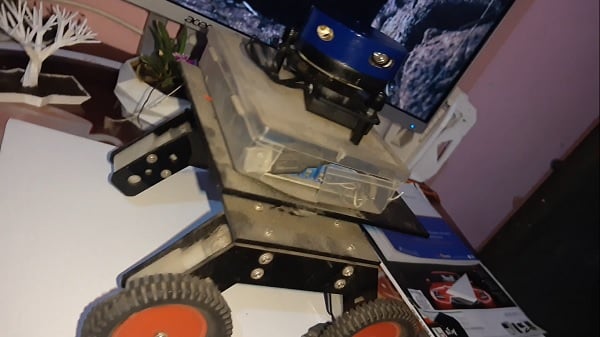
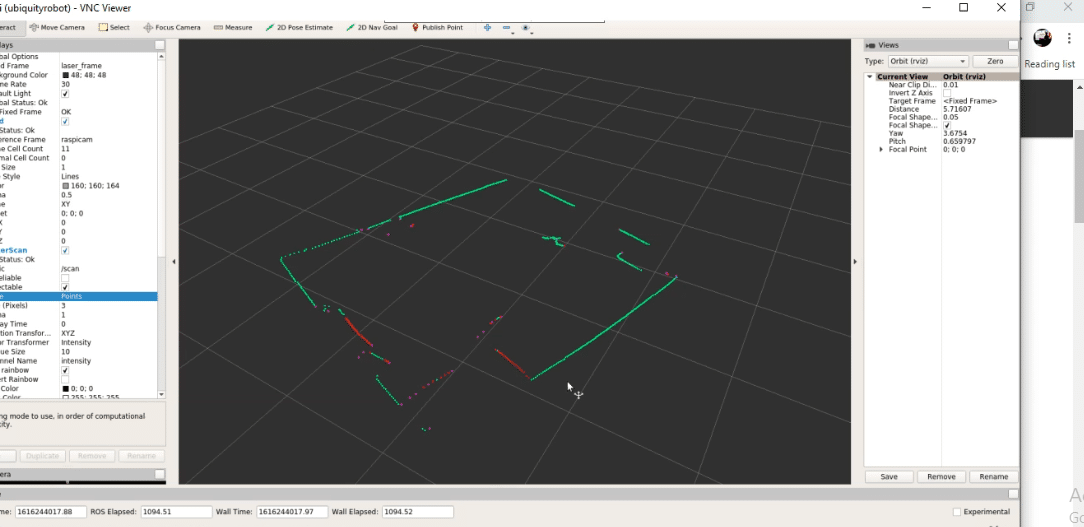
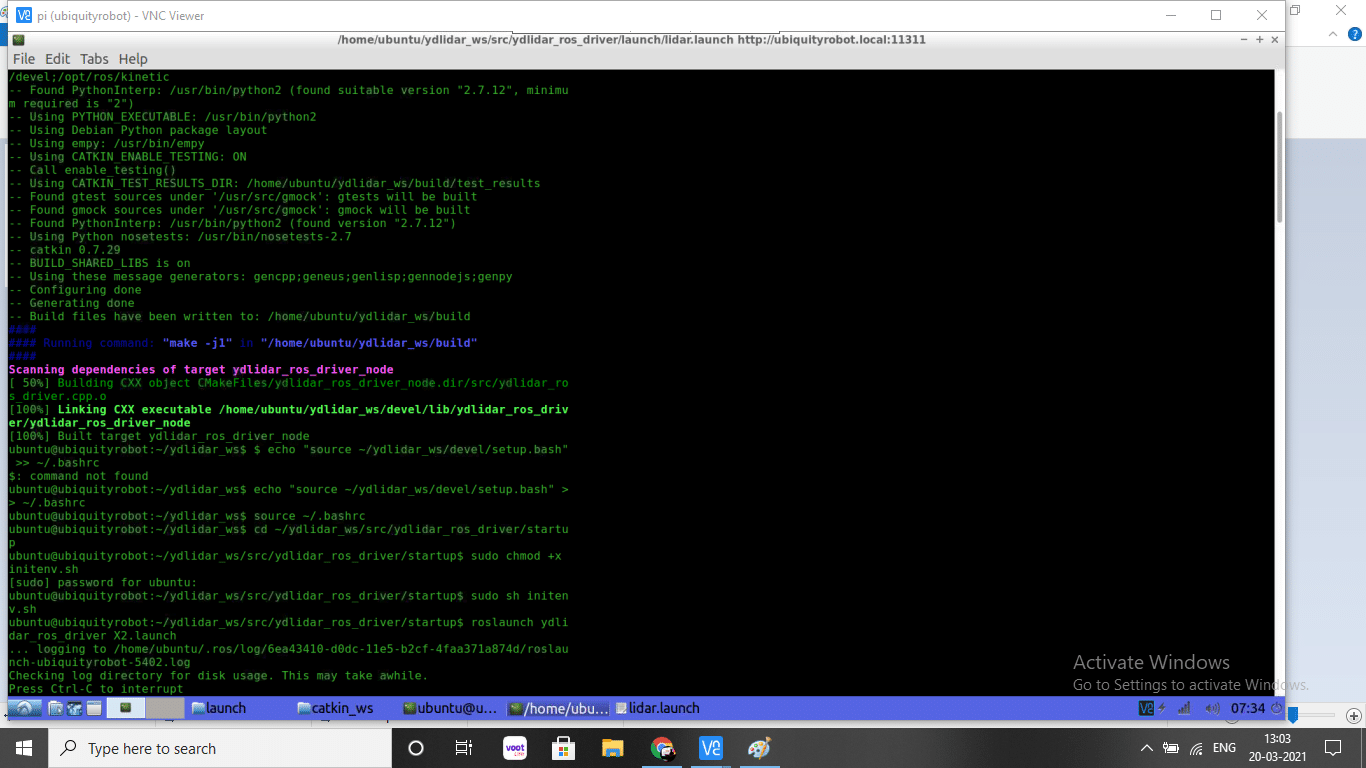
This advanced undergraduate-level engineering project integrates hardware and software to build an autonomous, ROS-controlled mobile robot. At the core of the system is a Raspberry Pi running Ubuntu OS, which acts as the central processing unit and master node for the Robot Operating System architecture. Power is supplied via an electronics battery, distributing voltage to the Raspberry Pi and the 4-wheel drive robot chassis motors. The Raspberry Pi interfaces with the motor drivers using Python libraries like gpiozero to handle movement and locomotion. For environmental perception, a high-resolution 4K LiDAR sensor is mounted to the chassis. The LiDAR actively scans the surrounding indoor environment, measuring distances by illuminating targets with laser light and calculating reflections. Data from the LiDAR is transmitted to the Raspberry Pi via the YDLidar SDK and the ROS YDLidar driver, translating raw sensor metrics into standard ROS messages. Within the ROS environment, algorithms process these messages to perform simultaneous localization and mapping (SLAM). Developers can visualize the generated 2D or 3D maps and monitor the robot's real-time positioning using RViz running on the platform. Additionally, custom graphical user interfaces can be built using Python and the guizero library to provide manual overrides, system status readouts, or launch controls for the mapping nodes, bridging low-level hardware control with high-level robotic navigation frameworks.
Why Build This
Master industrial navigation standards by implementing Robot Operating System (ROS) nodes, topics, and SLAM algorithms on real hardware.
Bridge high-level Python software logic with physical hardware actuators and sensors using standard Linux development workflows.
Design and deploy autonomous mobile robot systems applicable to warehouse automation, indoor security patrolling, and autonomous service robotics.
Real-World Application
Indoor autonomous navigation, warehouse automation, robotic vacuum cleaners, and indoor security patrolling.
Skills You'll Learn
ROS node architecture
SLAM mapping
LiDAR sensor integration
mobile robot kinematics
Python GPIO control
RViz visualization
Ubuntu Linux system administration
Safety Precautions
No specific precautions noted for this build — always follow general electronics safety practices.
Technology Tags
ROS
LIDAR
ROBOT OPERATING SYSTEM
PYTHON
UBUNTU
SLAM
NAVIGATION
ROBOTICS
Ready to build this?
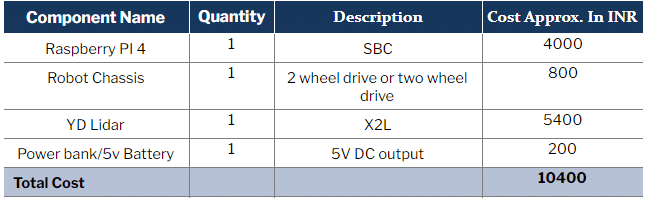
We stock the boards, sensors and modules this project needs. A full parts list is coming soon — for now, browse our DIY Kits & components or search for Raspberry Pi parts.
Frequently Asked Questions
Which ROS distribution should I install on my Raspberry Pi 5?
You should match your ROS distribution to your specific Ubuntu OS release compatible with the Raspberry Pi 5, such as ROS Noetic or newer ROS2 distributions depending on your software pipeline requirements.
Can I use a lower-resolution LiDAR sensor instead of the 4K LiDAR?
Yes, standard 2D or 3D LiDAR sensors supported by the YDLidar SDK can be substituted, though map fidelity and positioning accuracy may vary based on angular resolution and range.
Do I need an external monitor connected to the Raspberry Pi during mapping?
Not necessarily. You can run ROS master nodes and drivers headlessly on the Raspberry Pi while running RViz and the graphical interface on a separate host computer over a local network using ROS master-slave network configurations.
Gallery
Kitkraft Project Hub — curated from the maker community, credited at the source.
PRJ-00379