This project is sourced from another site, not written by us — this list is our best match of their components against what we stock, not a verified bill of materials. Always check the original blog (linked above) for the actual parts list before buying.
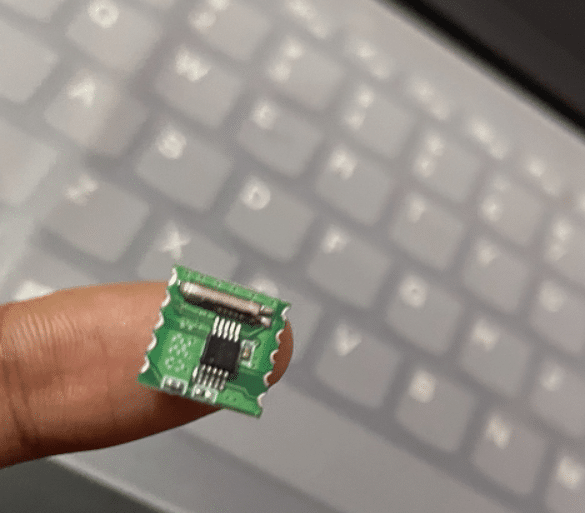
The Smallest Digital FM Radio Receiver operates through the coordinated interaction of an ESP microcontroller, an RDA5807M FM radio tuner chip, and an integrated Wi-Fi interface. The ESP microcontroller acts as the central processing unit, running code compiled and uploaded via the Arduino IDE using the ESP board package. To make the receiver user-friendly, the project utilizes the EASY UI library to serve a lightweight graphical user interface over a local Wi-Fi network. When a user interacts with this web-based interface on a smartphone or computer, the ESP microcontroller interprets the commands and communicates with the RDA5807M FM radio chip. The RDA5807M is responsible for tuning into specific frequency modulation (FM) broadcast bands, demodulating the analog audio signals, and processing the radio waves received from the airwaves. Powered by a dedicated power source and wired together using standard connecting wires, the circuit integrates audio output capabilities with modern wireless control. Software libraries specifically designed for FM radio management handle the complex tuning algorithms and signal processing protocols in the background, allowing the microcontroller to seamlessly change stations, adjust volume, and monitor tuning status based entirely on commands received through the wireless web user interface.
Why Build This
Design and deploy custom web-based graphical user interfaces for embedded IoT hardware.
Integrate dedicated radio frequency (RF) integrated circuits with modern microcontrollers.
Develop portable, battery-powered consumer electronics combining wireless networking and analog audio.
Real-World Application
Portable personal entertainment and DIY pocket radio devices for listening to local FM broadcast stations.
Skills You'll Learn
RF tuning configuration
Wi-Fi web server deployment
microcontroller peripheral interfacing
graphical user interface design for embedded systems
audio hardware integration
Safety Precautions
No specific precautions noted for this build — always follow general electronics safety practices.
Technology Tags
ESP
WI-FI
RDA5807M
FM RADIO
ARDUINO IDE
WEB UI
IOT
Frequently Asked Questions
Depending on how the EASY UI library and ESP code are configured, the ESP microcontroller can typically operate as its own Access Point (AP), allowing direct connection from a phone or computer without needing an external router.
You will need the Arduino IDE installed on your computer, along with the appropriate ESP board package, the EASY UI library, and an FM radio library added through the Library Manager.
The RDA5807M FM chip processes the incoming radio signals and outputs demodulated audio, which can be routed to headphones or a small amplifier powered by the circuit's power source.
Gallery
This page is part of Kitkraft's Project Hub — a curated collection of electronics & robotics projects gathered from the maker community to help students and hobbyists discover and learn to build. Kitkraft does not claim authorship of the original project, and makes no representation as to the accuracy, completeness or safety of third-party source material. The summary and "How It Works" explanation above are AI-generated, rewritten with reference to the original tutorial — not a reproduction of it. Full credit and a direct link to the original source are provided above. If you're the original creator and have a concern about how your work is represented here, please contact us and we'll address it promptly.
 Jumper Wire 10 Pin Male To Male 20cm
Rs. 45.00
 MB102 Adjustable Breadboard Power Supply Module (3.3V & 5V) for Arduino & Raspberry Pi
Rs. 139.00
 400 Points Mini Solderless Prototype PCB Breadboard High Quality
Rs. 89.00
 Jumper Wire 10 Pin Male To Female 20cm
Rs. 45.00


