This project is sourced from another site, not written by us — this list is our best match of their components against what we stock, not a verified bill of materials. Always check the original blog (linked above) for the actual parts list before buying.
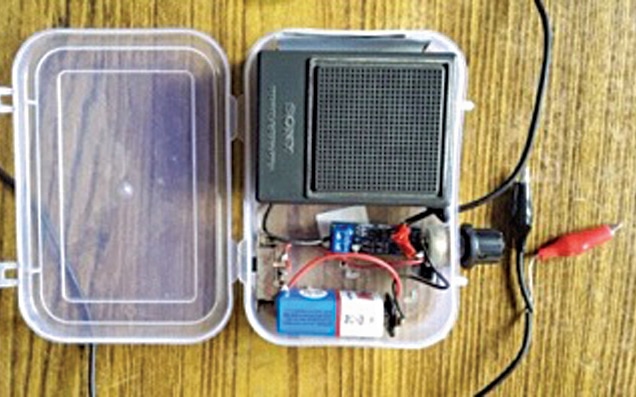
The Forgotten Crystal Radio – Revisited operates entirely as a passive receiver, meaning it derives all its operational energy directly from incoming AM medium wave radio frequency signals without requiring any external power source or battery. The system begins with a long outdoor antenna that intercepts electromagnetic waves broadcast from local radio stations. These high-frequency alternating current signals travel down the antenna and into the circuit, anchored by a low-resistance earth connection that completes the electrical path to the ground. Because the intercepted radio waves are modulated at audio frequencies using amplitude modulation, the alternating current must be demodulated to be heard by the human ear. A germanium diode serves this critical rectification function, taking advantage of its low forward voltage drop to clip off one half of the alternating current radio frequency wave, effectively extracting the audio envelope. Once rectified, the resulting audio signal is routed to a high-impedance transducer, such as a 2,000 to 4,000-ohm headphone or alternative telephone handset, which converts the electrical audio waveforms into acoustic sound waves. For builders looking to expand the basic design, optional additions such as an impedance-matching transformer allow standard low-impedance earphones to be used efficiently, while an LM386 amplifier module can be integrated into the signal chain to drive a small loudspeaker, requiring a separate power source for amplification.
Why Build This
Explore the fundamental principles of passive radio frequency reception and amplitude modulation without relying on active components or batteries.
Gain hands-on engineering experience with electromagnetic wave capture, signal demodulation, and impedance matching in analog circuits.
Analyze the historical evolution of early wireless communication systems through practical experimentation and circuit optimization.
Real-World Application
Educational demonstration of passive radio wave reception and early wireless communication history.
Skills You'll Learn
Radio frequency signal capture
Passive analog circuit design
Signal demodulation and rectification
Impedance matching
Audio amplification integration
Safety Precautions
Ensure a safe outdoor antenna setup and proper lightning protection/grounding when erecting long wire antennas.
Frequently Asked Questions
No, the basic crystal radio is entirely passive and operates solely on the electrical energy captured by the outdoor antenna from radio waves.
Standard low-impedance headphones will heavily load down the weak crystal radio circuit, resulting in almost inaudible sound; high-impedance headphones or an impedance-matching transformer are required.
The earth connection provides a stable reference ground, completing the antenna circuit to maximize the signal current flowing through the detector.
Gallery
This page is part of Kitkraft's Project Hub — a curated collection of electronics & robotics projects gathered from the maker community to help students and hobbyists discover and learn to build. Kitkraft does not claim authorship of the original project, and makes no representation as to the accuracy, completeness or safety of third-party source material. The summary and "How It Works" explanation above are AI-generated, rewritten with reference to the original tutorial — not a reproduction of it. Full credit and a direct link to the original source are provided above. If you're the original creator and have a concern about how your work is represented here, please contact us and we'll address it promptly.
 2-Slot 18650 Holder with Protective Cover and On/Off Switch – Case
Rs. 109.00
 400 Points Mini Solderless Prototype PCB Breadboard High Quality
Rs. 89.00
 MB102 Adjustable Breadboard Power Supply Module (3.3V & 5V) for Arduino & Raspberry Pi
Rs. 139.00
 Jumper Wire 10 Pin Male To Male 20cm
Rs. 45.00
 Jumper Wire 10 Pin Male To Female 20cm
Rs. 45.00


