This project is sourced from another site, not written by us — this list is our best match of their components against what we stock, not a verified bill of materials. Always check the original blog (linked above) for the actual parts list before buying.
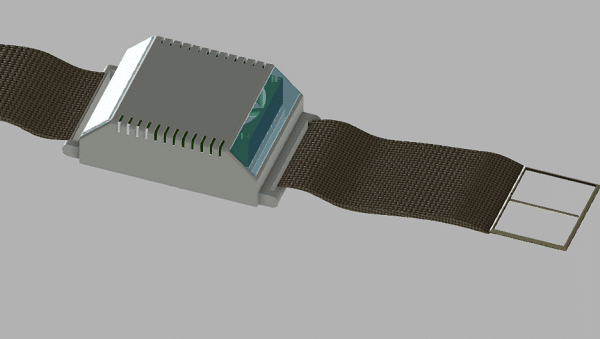
This wearable personal climate control and vital signs monitor is orchestrated by an Arduino Pro Mini microcontroller. The core of the temperature-regulating subsystem is a thermoelectric module, which utilizes the Peltier effect to either heat or cool depending on the direction of the electrical current flowing through it. Because thermoelectric modules draw significant current and require precise directional control, the Arduino interfaces with them via power MOSFETs acting as electronic switches, allowing variable power delivery. Thermal dissipation is managed by a small fan attached to the module to regulate heat transfer and prevent overheating on the hot face of the assembly. To monitor the user's biological feedback and ambient conditions, the system integrates an LM35 analog temperature sensor for precise thermal readings and a MAX30100 optical sensor communicating via I2C to capture pulse rate and blood oxygen levels. The entire electronics assembly is housed within a custom cardboard or 3D-printed enclosure secured by a wrist band or leather belt for comfortable wearable integration. Power is supplied by an onboard battery. Software-wise, the Arduino IDE is used to program the microcontroller logic—reading sensor thresholds and adjusting MOSFET outputs—while the Kodular App Builder facilitates custom mobile application development for remote monitoring and user interface control over wireless communication.
Why Build This
Design closed-loop biomedical and assistive wearable devices that combine physiological monitoring with active physical feedback.
Implement power electronics principles by driving high-current thermoelectric loads with low-power microcontroller logic via MOSFETs.
Integrate cross-platform development ecosystems by pairing embedded C++ Arduino firmware with mobile apps built via Kodular.
Real-World Application
Personal thermal comfort in extreme hot and cold environments, along with continuous portable health and vital signs monitoring.
Skills You'll Learn
Thermoelectric module control
MOSFET power switching
analog temperature sensing
I2C sensor communication
pulse oximetry data acquisition
battery power management
mobile app development with Kodular
embedded firmware design
Safety Precautions
Ensure proper thermal management and insulation around the thermoelectric module to avoid skin burns or discomfort.
Technology Tags
THERMOELECTRIC
PELTIER EFFECT
WEARABLE ELECTRONICS
TEMPERATURE REGULATION
ARDUINO
SENSORS
MOBILE APP
Frequently Asked Questions
Reversing the polarity of the DC current flowing through the thermoelectric module reverses the direction of heat transfer, causing one side to absorb heat (cooling) and the other to release it (heating).
Arduino digital pins can only supply a few milliamps of current, whereas thermoelectric modules require much higher current to operate effectively. MOSFETs act as high-speed electronic switches that let the low-power Arduino control the large currents safely.
The LM35 measures temperature accurately for thermal regulation, while the MAX30100 optically monitors the user's pulse rate and blood oxygen saturation to provide continuous health tracking alongside thermal comfort.
Gallery
This page is part of Kitkraft's Project Hub — a curated collection of electronics & robotics projects gathered from the maker community to help students and hobbyists discover and learn to build. Kitkraft does not claim authorship of the original project, and makes no representation as to the accuracy, completeness or safety of third-party source material. The summary and "How It Works" explanation above are AI-generated, rewritten with reference to the original tutorial — not a reproduction of it. Full credit and a direct link to the original source are provided above. If you're the original creator and have a concern about how your work is represented here, please contact us and we'll address it promptly.
 DC Motor Plastic Fan Blade
Rs. 19.00
 400 Points Mini Solderless Prototype PCB Breadboard High Quality
Rs. 89.00
 MB102 Adjustable Breadboard Power Supply Module (3.3V & 5V) for Arduino & Raspberry Pi
Rs. 139.00
 Jumper Wire 10 Pin Male To Male 20cm
Rs. 45.00
 Jumper Wire 10 Pin Male To Female 20cm
Rs. 45.00


