Project Hub/3D Printing & Fabrication/3D Printed Mechanisms & Enclosures/Design and Build your own High Power USB Hub Port Extender
Advanced
ANALOG / DISCRETE
₹1,500 – ₹5,000
6 – 12 Hours
Design and Build your own High Power USB Hub Port Extender
A comprehensive guide to designing and building a custom 4-port powered USB hub using the GL850G controller IC complete with a custom PCB and enclosure.
Originally published by Mohammed Ali on CircuitDigest
View original tutorial
How It Works
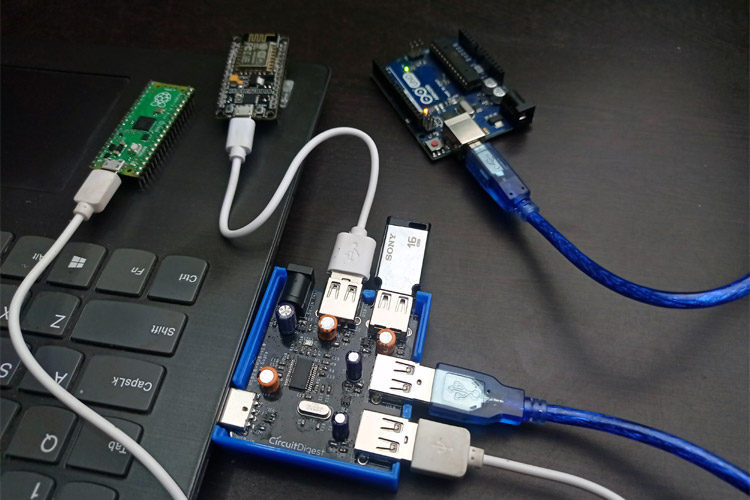
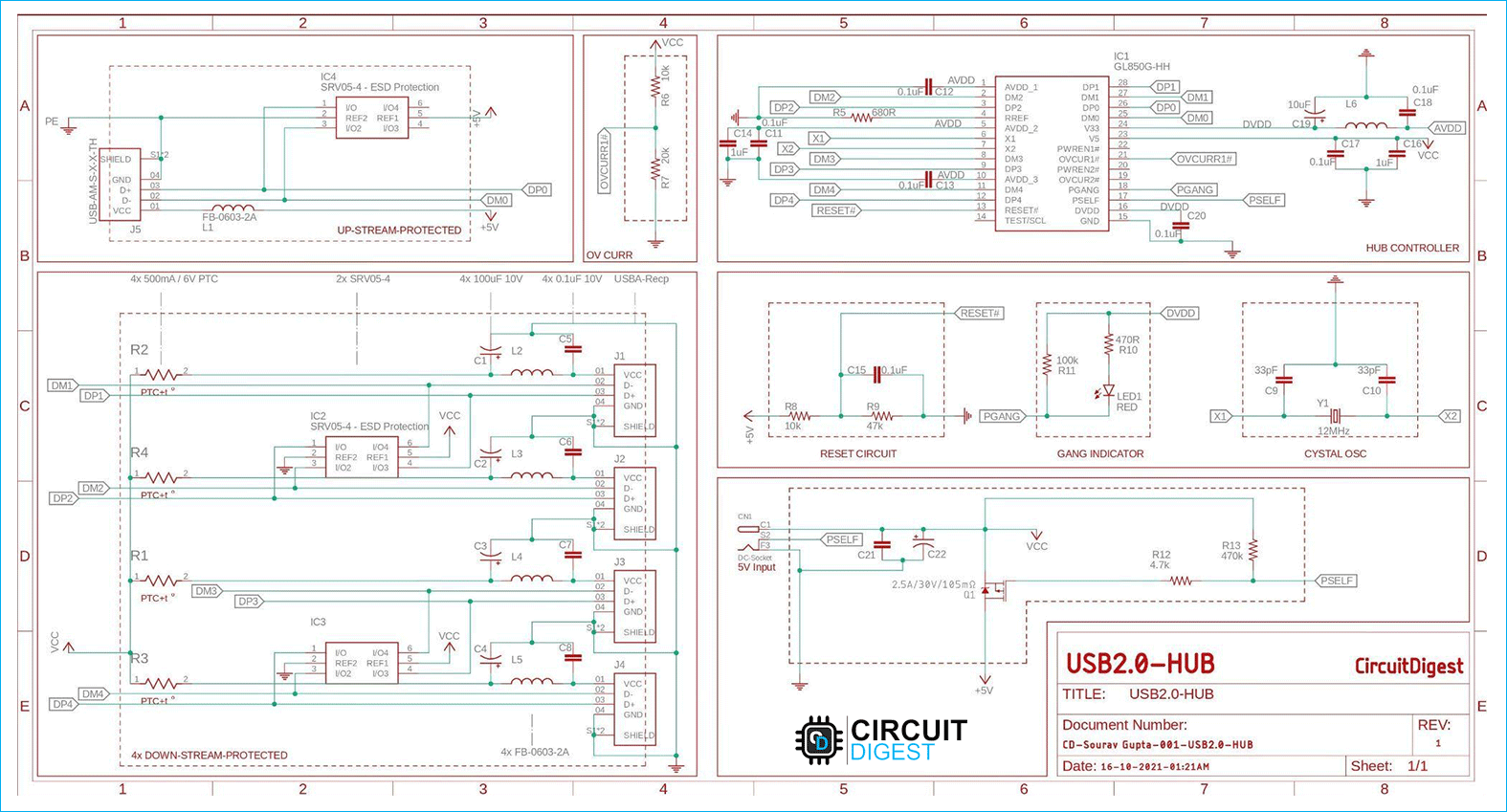
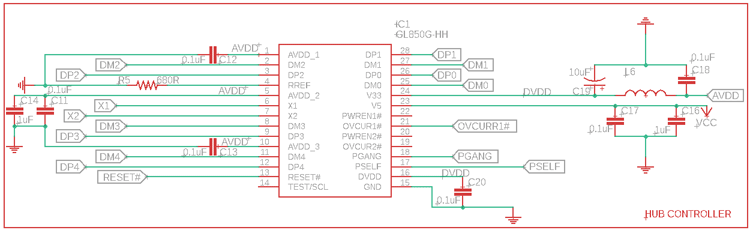
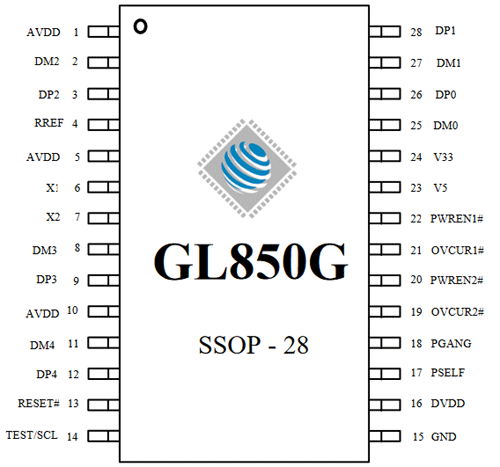
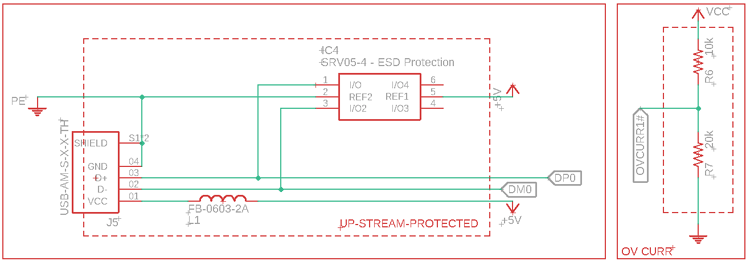
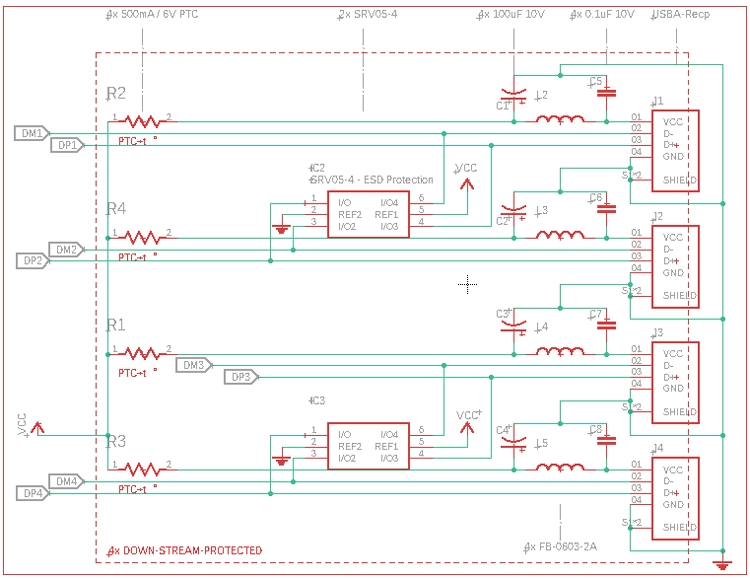
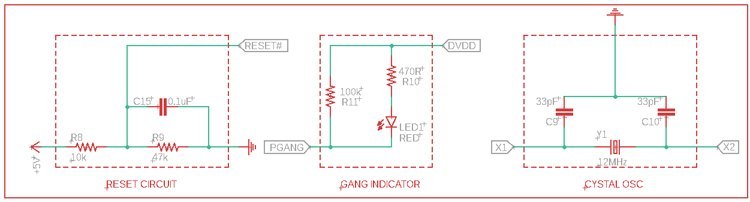
This high-power USB hub project centers around the GL850G-HH controller IC, which acts as the core USB hub controller managing data flow between a single upstream host and multiple downstream peripherals. Driven by a 12MHz crystal oscillator to maintain precise USB timing, the IC communicates through USB-AM sockets for the upstream connection and USB-A sockets for downstream devices. Power management and safety are heavily integrated into the architecture. A DC barrel jack accepts external 5V power, distributed safely via MOSFET Q1 and regulated with 100uF and 0.1uF capacitors to smooth voltage transients. To protect downstream data lines from electrostatic discharge, SRV05-4 ESD protection diodes are incorporated. Additionally, individual 500mA PTC fuses guard each port against overcurrent events, while ferrite beads help suppress electromagnetic interference (EMI) across the power and data rails. All of these custom analog components and the custom PCB are housed securely inside a fabricated 3D printed enclosure.
Why Build This
Design a custom, powered multi-port USB hub from discrete components rather than relying on off-the-shelf commercial peripherals.
Implement robust power delivery, overcurrent protection via PTC fuses, and ESD suppression for undergraduate-level hardware validation.
Gain hands-on experience integrating a complex controller IC (GL850G-HH) with a custom PCB and a 3D-printed mechanical enclosure.
Real-World Application
Expanding laptop or PC USB connectivity to simultaneously connect multiple peripherals such as mice, keyboards, and flash drives while providing safe power delivery.
Skills You'll Learn
Custom PCB design
USB hardware architecture layout
power distribution network design
ESD protection implementation
overcurrent protection with PTC fuses
3D printed enclosure integration
Safety Precautions
Ensure proper polarity when connecting external 5V power supplies and DC jacks to prevent damage to connected host devices and the hub IC.
Technology Tags
USB 2.0
GL850G IC
PCB DESIGN
DIFFERENTIAL PAIR ROUTING
PTC FUSES
TVS DIODES
POWER DISTRIBUTION
3D PRINTING
Ready to build this?
We stock the boards, sensors and modules this project needs. A full parts list is coming soon — for now, browse our DIY Kits & components or search for Analog / Discrete parts.
Frequently Asked Questions
Why is an external DC barrel jack required instead of powering the hub entirely from the computer?
An external power supply ensures that the hub can deliver stable, high power (up to 500mA per port via the PTC fuses) to multiple connected peripherals simultaneously without overloading the host computer's USB port.
What is the role of the 12MHz crystal oscillator?
The crystal oscillator provides a precise clock signal required by the GL850G-HH controller IC to properly time and synchronize USB data communication packets with the host.
Do I need to program any microcontrollers for this project?
No, software is not listed or required for this analog and discrete build, as the GL850G-HH functions as a hardware-managed USB hub controller.
Gallery
Kitkraft Project Hub — curated from the maker community, credited at the source.
PRJ-00534