This project is sourced from another site, not written by us — this list is our best match of their components against what we stock, not a verified bill of materials. Always check the original blog (linked above) for the actual parts list before buying.
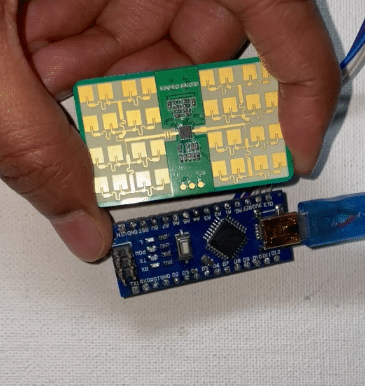
This contactless health monitoring system relies on an Arduino Uno paired with a 24GHz millimeter-wave (mm-wave) radar sensor connected via jumper wires. The mm-wave radar operates by continuously transmitting high-frequency radio waves into a targeted environment and analyzing the reflected signals. When a human subject is present within the radar's field of view, the emitted waves bounce off the body. Subtle movements—such as chest wall displacements caused by breathing or micro-motions from heart activity—cause phase shifts in the reflected radar waves through the Doppler effect. The 24GHz radar sensor processes these return signals internally and communicates motion and vital sign data to the Arduino micro-controller. By utilizing the dedicated Radar Sensor Library within the Arduino IDE, the system translates these raw phase and frequency variations into readable data streams. Because it captures reflected radio frequency waves rather than capturing optical video or requiring physical contact via a wearable band, the circuit can effectively detect human presence, motion, and vital parameters entirely through non-invasive, line-of-sight radio frequency sensing.
Why Build This
Design privacy-compliant health monitoring systems for environments like elderly care facilities and hospitals where cameras or wearable devices are intrusive or impractical.
Gain hands-on experience integrating high-frequency RF sensors with microcontrollers to process real-time environmental data for undergraduate engineering portfolios.
Explore contactless biomedical sensing techniques that measure vital signs and human activity without requiring physical attachments or patient compliance.
Real-World Application
Contactless health monitoring in environments where wearables or cameras are impractical, such as bathrooms, hospitals, elderly care, and privacy-sensitive spaces.
Skills You'll Learn
millimeter-wave radar integration
sensor library utilization
serial data processing
non-contact vital sign extraction
environmental motion tracking
Safety Precautions
No specific precautions noted for this build — always follow general electronics safety practices.
Technology Tags
RADAR SENSOR
MM-WAVE SENSOR
ARDUINO
HEALTH MONITORING
WIRELESS ACTIVITY TRACKER
IOT
SENSOR INTERFACING
Frequently Asked Questions
No, this project is completely contact-free. The 24GHz mm-wave radar senses motion and vitals through the air using radio waves, eliminating the need for any wearable hardware.
You will need the standard Arduino IDE installed on your computer, along with the specific Radar Sensor Library required to interface with the 24GHz radar module.
While 24GHz mm-wave signals can penetrate certain lightweight interior materials, this project is designed for line-of-sight contactless monitoring within a room or targeted environment to track local human activity and vitals accurately.
Gallery
This page is part of Kitkraft's Project Hub — a curated collection of electronics & robotics projects gathered from the maker community to help students and hobbyists discover and learn to build. Kitkraft does not claim authorship of the original project, and makes no representation as to the accuracy, completeness or safety of third-party source material. The summary and "How It Works" explanation above are AI-generated, rewritten with reference to the original tutorial — not a reproduction of it. Full credit and a direct link to the original source are provided above. If you're the original creator and have a concern about how your work is represented here, please contact us and we'll address it promptly.
 RCWL-0516 Microwave Radar Sensor
Rs. 59.00
 Jumper Wire 10 Pin Male To Male 20cm
Rs. 45.00
 400 Points Mini Solderless Prototype PCB Breadboard High Quality
Rs. 89.00
 MB102 Adjustable Breadboard Power Supply Module (3.3V & 5V) for Arduino & Raspberry Pi
Rs. 139.00
 Jumper Wire 10 Pin Male To Female 20cm
Rs. 45.00


