Intermediate
STM32
₹500 – ₹1,500
3 – 6 Hours
IR2IO
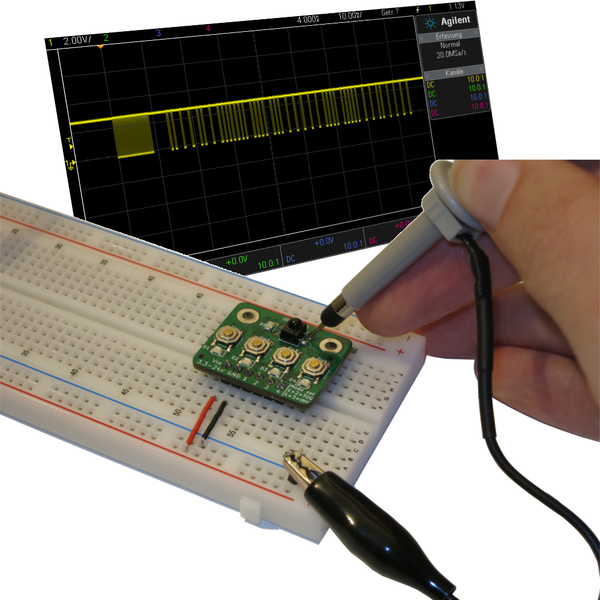
IR2IO is a simple 4-channel switch compatible with almost any common infrared remote control without needing to know specific protocols or frequencies.
Originally published by rootfrogsMakes on Hackaday.io
View original tutorial
How It Works
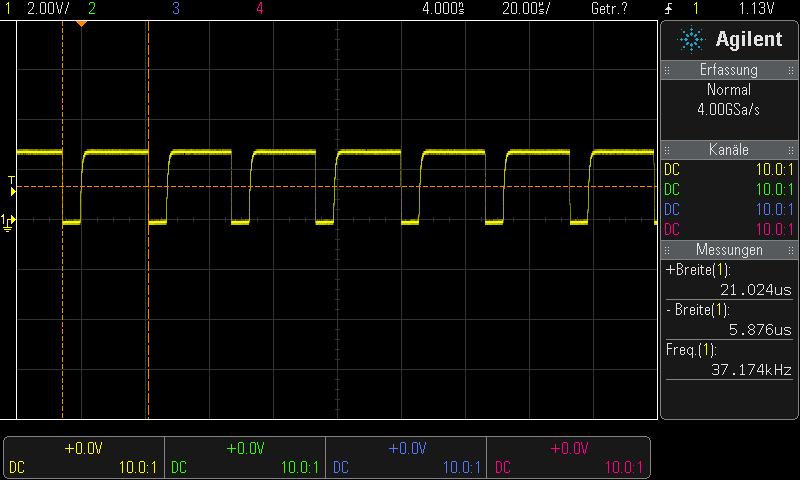
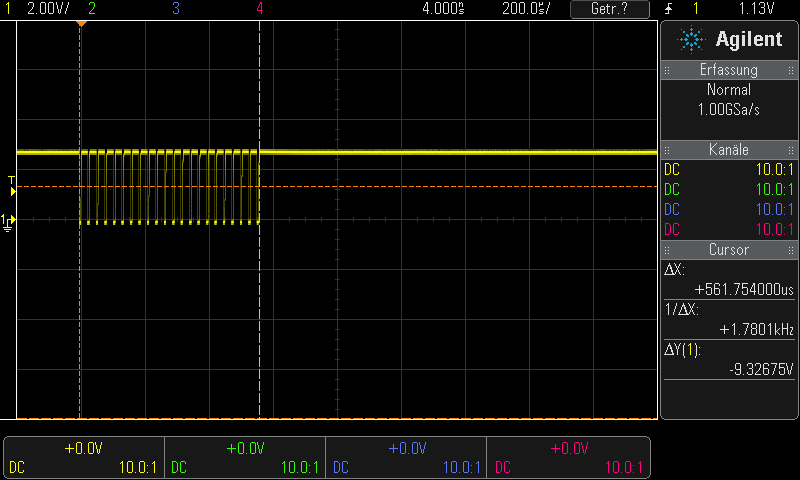
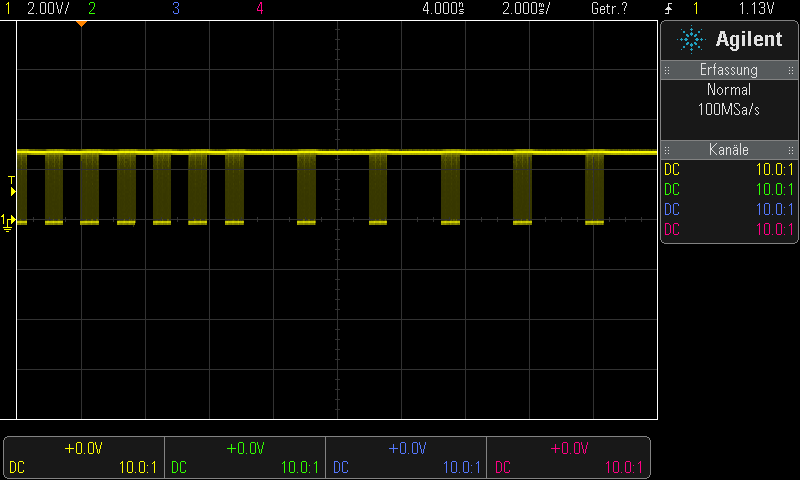
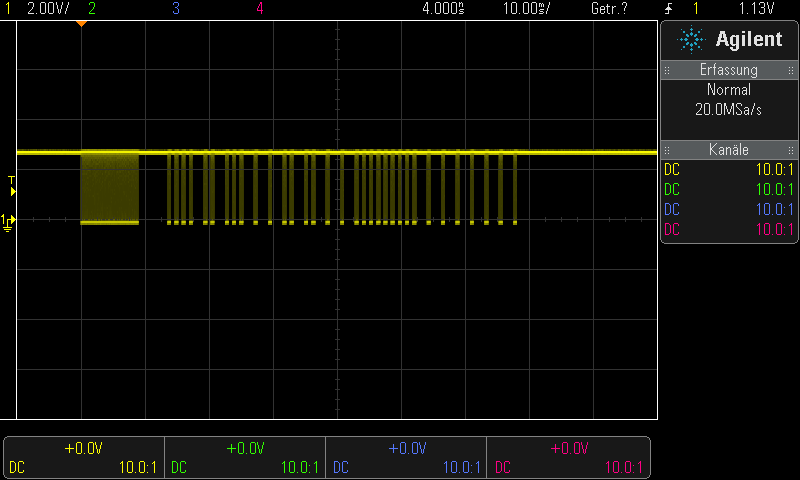
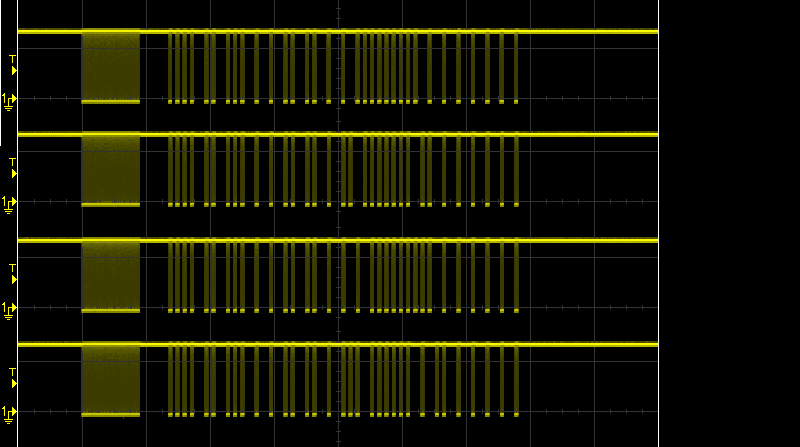
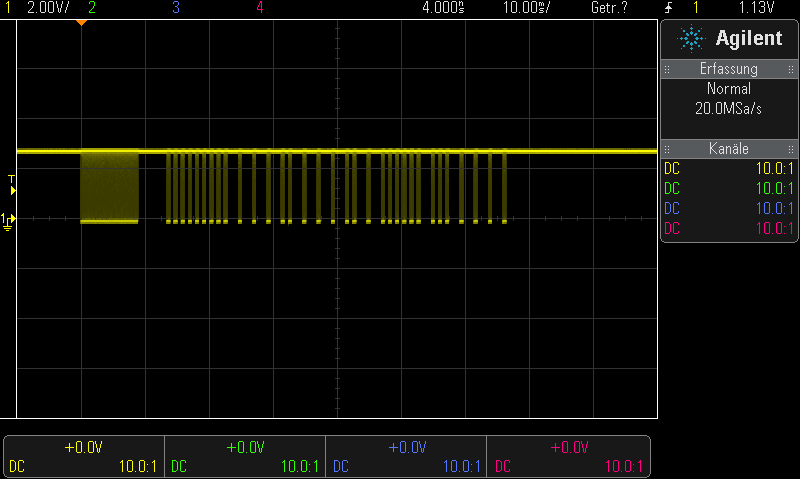
The IR2IO project functions as a 4-channel switch controlled by standard infrared remote controls. At the core of the system is an STM32 microcontroller (specifically hosted on the STM32 Blue Pill board featuring the F103C8T6 chip), which processes inputs and manages the switching logic. An IRM-H600 broadband IR receiver is integrated onto the custom PCB to capture incoming infrared light signals across a wide frequency range without requiring the user to decode specific transmission protocols. When you press a button on a common household remote, the IR receiver detects the modulated light pulses and converts them into electrical digital signals that are fed directly into the STM32 microcontroller. The microcontroller's firmware interprets these incoming pulse trains to trigger state changes across the four independent output channels. Users can also interact with the system locally via onboard push-buttons, providing a manual override or alternative control method alongside the wireless infrared input. Passive components such as resistors and capacitors are distributed across the PCB to ensure stable power delivery, proper signal conditioning, and reliable filtering for both the microcontroller and the IR receiver circuit. By combining optical sensing, digital edge-detection, and microcontroller-based sequential logic, the IR2IO translates arbitrary remote control commands into clean digital switching actions suitable for driving external loads or interfacing with broader electronic systems.
Why Build This
Integrate universal infrared control into undergraduate engineering prototypes and custom home automation systems without spending time analyzing proprietary remote protocols.
Develop practical competence in designing and assembling custom printed circuit boards that interface optical receivers with ARM Cortex-M microcontrollers.
Implement multi-channel digital switching logic combining both wireless infrared inputs and physical push-button overrides.
Real-World Application
Universal remote control switching for DIY electronics, home automation projects, and appliance control.
Skills You'll Learn
infrared signal reception
microcontroller digital input processing
printed circuit board assembly
debounced push-button interfacing
multi-channel switching logic
Safety Precautions
No specific precautions noted for this build — always follow general electronics safety practices.
Technology Tags
INFRARED
REMOTE CONTROL
STM32
PCB
MICROCONTROLLER
DEMODULATION
DMA
Ready to build this?
We stock the boards, sensors and modules this project needs. A full parts list is coming soon — for now, browse our DIY Kits & components or search for STM32 parts.
Frequently Asked Questions
Do I need to program the STM32 microcontroller myself?
Yes, while the software requirements are not explicitly listed in the basic catalog data, deploying and configuring the firmware on the STM32 Blue Pill requires a standard development environment compatible with ARM Cortex-M microcontrollers.
Which remote controls are compatible with the IRM-H600 receiver?
Because the IRM-H600 is a broadband receiver designed to capture general modulated IR pulses rather than a specific frequency-locked protocol, it is compatible with almost any common consumer infrared remote control.
Can the four channels directly drive high-voltage appliances like lamps?
The project functions as a low-level 4-channel switch; controlling high-voltage AC mains equipment directly would require additional relay or power-switching stages not explicitly detailed in the core component list.
Gallery
Kitkraft Project Hub — curated from the maker community, credited at the source.
PRJ-00285