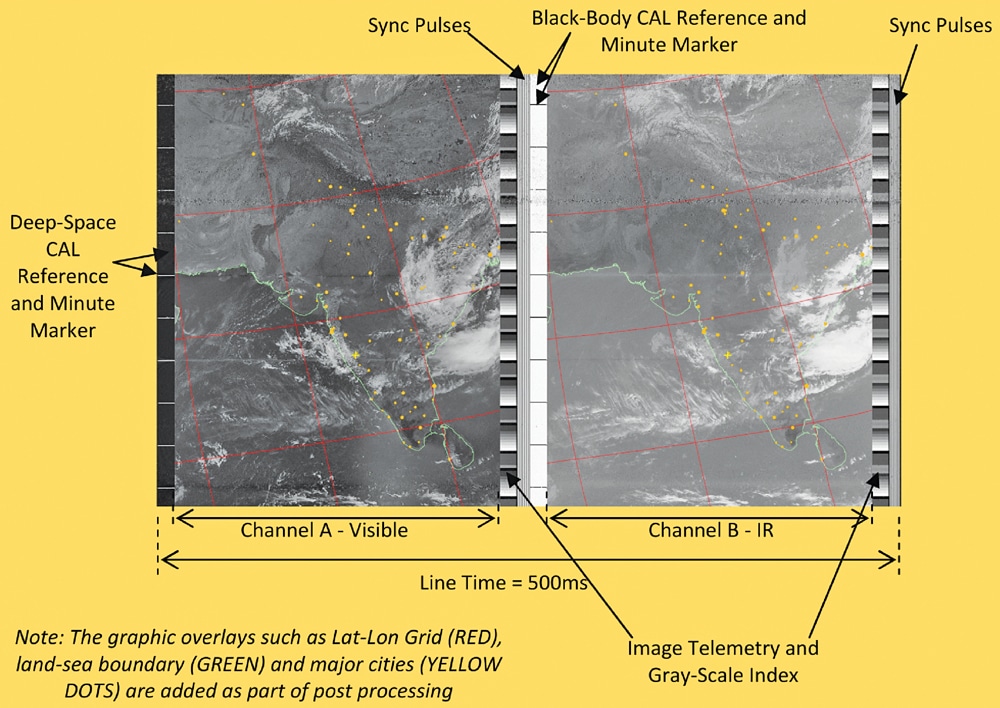
This article explores the imaging systems of weather satellites, the automatic picture transmission (APT) protocol, and how to decode digital QPSK transmissions from the Russian Meteor M2 satellite using an SDR receiver.
We stock the boards, sensors and modules this project needs. A full parts list is coming soon — for now, browse our DIY Kits & components or search for Analog / Discrete parts.
This project is sourced from another site, not written by us — this list is our best match of their components against what we stock, not a verified bill of materials. Always check the original blog (linked above) for the actual parts list before buying.
We don't carry yet: Radio Receiver / Transmitter (RC)
Ambient / Weather (rain gauge, anemometer, UV)
The Weather Satellite Station for Meteor M2 Reception operates by capturing radio frequency signals transmitted from low-Earth orbit meteorological satellites using a specialized antenna setup tuned to the correct frequency band. This captured analog RF signal is fed into a Software Defined Receiver (SDR), which digitizes a wide spectrum of frequencies and passes them to a host computer via USB. On the computer, receiver demodulation software and specific plug-ins process the raw digital data streams. For the Russian Meteor M2 satellite, the system decodes complex digital QPSK (Quadrature Phase Shift Keying) modulated transmissions. The demodulated data is then reconstructed by the software into viewable meteorological imagery and telemetry packets, allowing the user to observe live weather patterns and environmental data directly from space.
Why Build This
Gain hands-on experience with digital communication protocols and QPSK demodulation techniques used in modern satellite links.
Apply electromagnetic theory by designing, aligning, and testing custom antenna setups for orbital signal acquisition.
Process real-world environmental and meteorological data for academic research or tracking nano-satellite communications.
Real-World Application
Meteorological observation, environmental monitoring, satellite tracking, and academic research on nano-satellite/CubeSat communication systems.
Skills You'll Learn
Software-defined radio configuration
RF signal demodulation
QPSK digital communication analysis
satellite tracking and orbital mechanics
antenna tuning and matching
meteorological data processing
Safety Precautions
No specific precautions noted for this build — always follow general electronics safety practices.
Technology Tags
SDR
QPSK MODULATION
WEATHER SATELLITES
METEOR M2
APT PROTOCOL
RF RECEPTION
ANTENNA SETUP
SIGNAL DEMODULATION
Frequently Asked Questions
You need an antenna specifically designed and tuned for the frequency band used by the Meteor M2 satellite, such as a circularly polarized V-dipole or QFH (Quadrifilar Helix) antenna, to handle the changing polarization of passing satellites.
The SDR hardware only captures and digitizes the raw radio spectrum; specialized demodulation software is necessary to parse the digital QPSK signal and translate it into visible image data.
Yes, once your SDR receiver and antenna setup are configured, you can tune to different frequencies to receive signals from other weather satellites, NOAA APT transmissions, or amateur radio spacecraft.
Gallery
This page is part of Kitkraft's Project Hub — a curated collection of electronics & robotics projects gathered from the maker community to help students and hobbyists discover and learn to build. Kitkraft does not claim authorship of the original project, and makes no representation as to the accuracy, completeness or safety of third-party source material. The summary and "How It Works" explanation above are AI-generated, rewritten with reference to the original tutorial — not a reproduction of it. Full credit and a direct link to the original source are provided above. If you're the original creator and have a concern about how your work is represented here, please contact us and we'll address it promptly.