This project is sourced from another site, not written by us — this list is our best match of their components against what we stock, not a verified bill of materials. Always check the original blog (linked above) for the actual parts list before buying.
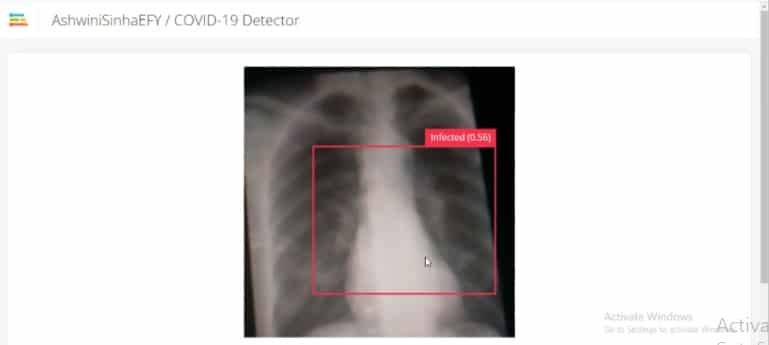
The X-Ray-Based Quick COVID-19 Detection system operates by leveraging machine learning models deployed locally on a Raspberry Pi 5 to analyze digital lung X-ray images. At the core of the system is a trained Edge ML model, initially created using tools like Edge Impulse, TensorFlow, or PyTorch, which is optimized to recognize specific pathological patterns associated with COVID-19 infections. The Raspberry Pi board serves as the central processing unit running Raspbian OS and Node.js environments to execute the classification pipeline. When an X-ray image is provided to the system—either captured via a Raspberry Pi Camera or loaded from an image dataset—the Edge Impulse Linux CLI and Python scripts process the pixel data through the neural network. The model evaluates the image features against its trained weights, outputting a classification result that indicates the presence or absence of infection markers. This output is then rendered onto an attached HDMI display or monitor, providing a visual diagnosis in real-time without relying on cloud-based infrastructure. Power is supplied reliably to the single-board computer via an appropriate power supply to sustain the computational load required for edge inference.
Why Build This
Develop practical competencies in deploying and running deep learning inference models on edge hardware using Raspberry Pi 5.
Understand the end-to-end pipeline of medical image classification, from dataset handling to real-time local processing.
Explore offline diagnostic solutions suitable for remote clinics and resource-constrained environments where cloud connectivity is limited.
Real-World Application
Rapid preliminary medical screening for COVID-19 and other lung infections in clinics and remote areas where quick results are critical.
Skills You'll Learn
Edge AI model deployment
medical image classification
Python programming for machine learning
Linux command-line operations
Edge Impulse CLI workflow
Node.js environment management
Safety Precautions
Ensure proper medical handling and data privacy when dealing with patient X-Ray datasets.
Technology Tags
PYTHON
TENSORFLOW
PYTORCH
EDGE IMPULSE
MACHINE LEARNING
IMAGE PROCESSING
RASPBERRY PI
HEALTHCARE
COVID-19 DETECTION
Frequently Asked Questions
Yes, because the machine learning model is executed locally on the Raspberry Pi 5 using Edge ML, internet connectivity is not required for real-time image analysis once the software and models are installed.
No, you do not need a clinical X-ray machine. The system analyzes digital X-ray image files provided via a dataset or captured via a compatible camera module.
No, this is an engineering and educational prototype designed for rapid preliminary screening demonstrations and research exploration, not for clinical certification or definitive medical diagnosis.
Gallery
This page is part of Kitkraft's Project Hub — a curated collection of electronics & robotics projects gathered from the maker community to help students and hobbyists discover and learn to build. Kitkraft does not claim authorship of the original project, and makes no representation as to the accuracy, completeness or safety of third-party source material. The summary and "How It Works" explanation above are AI-generated, rewritten with reference to the original tutorial — not a reproduction of it. Full credit and a direct link to the original source are provided above. If you're the original creator and have a concern about how your work is represented here, please contact us and we'll address it promptly.
 Raspberry Pi 3 - Model B+ 1.4Ghz 64-bit quad-core Processor with 1 GB Ram (Original)
Rs. 9,810.00
 MB102 Adjustable Breadboard Power Supply Module (3.3V & 5V) for Arduino & Raspberry Pi
Rs. 139.00
 400 Points Mini Solderless Prototype PCB Breadboard High Quality
Rs. 89.00
 Jumper Wire 10 Pin Male To Male 20cm
Rs. 45.00
 Jumper Wire 10 Pin Male To Female 20cm
Rs. 45.00


