Intermediate
8051
₹500 – ₹1,500
3 – 6 Hours
RFID Based Attendance System
An automated RFID-based attendance logging system built using an 8051 microcontroller, 16x2 LCD, and an L293D motor driver.
Originally published by S Saddam on CircuitDigest
View original tutorial
How It Works
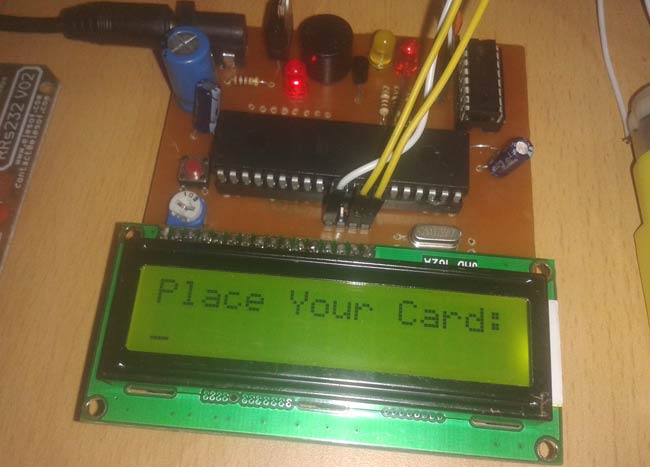
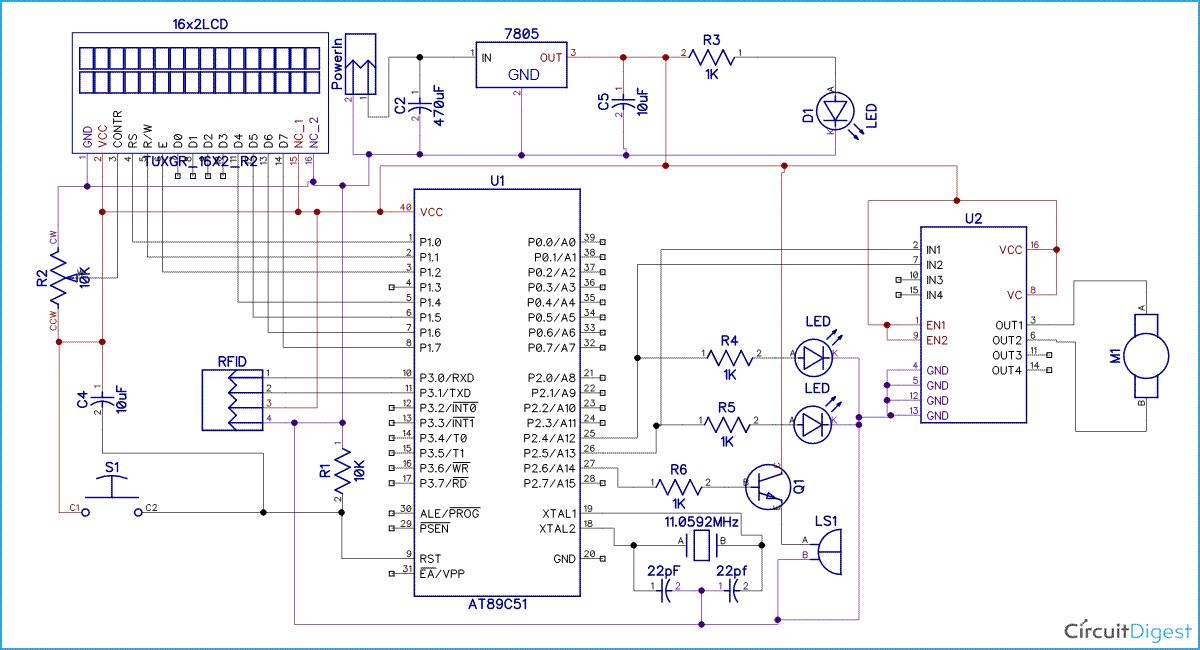
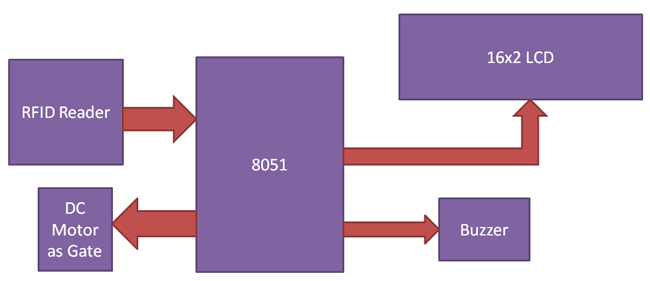
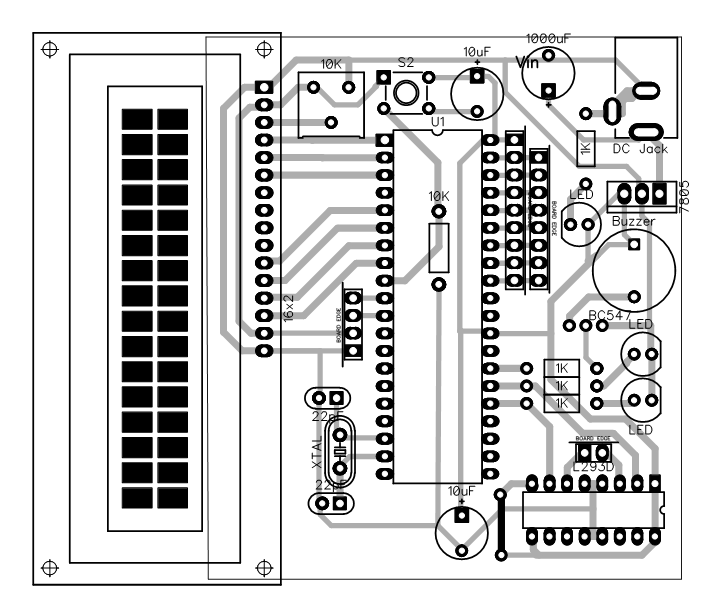
The RFID Based Attendance System operates by utilizing an 8051 microcontroller to read, process, and log identification data retrieved from an external RFID reader. When an authorized RFID card or tag is brought into proximity with the RFID reader, the reader captures the unique identification number and transmits this data to the 8051 microcontroller. Upon receiving the valid ID, the microcontroller processes the information and triggers several output peripherals. A 16x2 LCD display provides visual feedback, showing confirmation messages or attendance details to the user. Simultaneously, a BC547 NPN transistor acts as a switch to drive an audible buzzer, providing an audio cue that the card has been successfully scanned. Furthermore, the system incorporates an L293D motor driver IC connected to a DC motor, which can be programmed to actuate a physical barrier—such as a gate or door lock—granting access upon a successful read. The entire circuit is supported by a stable power supply and clocked via a crystal oscillator circuit connected to the microcontroller to ensure reliable execution of the control code written in Keil uVision.
Why Build This
Design a practical, automated attendance logging solution suitable for deployment in classrooms, university lecture halls, and corporate offices.
Gain hands-on experience integrating peripheral hardware modules like RFID readers and LCD displays with a foundational 8051 microcontroller architecture.
Implement electromechanical control systems by interfacing motor drivers and DC motors with digital logic for automated access control.
Real-World Application
Schools, colleges, corporate offices, and secure facilities for automated attendance and access control.
Skills You'll Learn
Microcontroller programming in C/Assembly
RFID communication protocols
LCD interfacing and character display management
DC motor control via H-bridge drivers
transistor switching circuits for inductive loads
Safety Precautions
No specific precautions noted for this build — always follow general electronics safety practices.
Technology Tags
RFID
8051
MICROCONTROLLER
LCD
L293D
BUZZER
EMBEDDED C
UART
Ready to build this?
We stock the boards, sensors and modules this project needs. A full parts list is coming soon — for now, browse our DIY Kits & components or search for 8051 parts.
Frequently Asked Questions
How does the RFID reader communicate with the 8051 microcontroller?
The RFID reader typically communicates with the microcontroller by transmitting the scanned card's unique identification data via serial communication or standard digital protocols compatible with the microcontroller's GPIO pins.
What is the role of the L293D motor driver IC in this system?
The L293D is a dual-H-bridge motor driver that allows the low-current digital signals from the 8051 microcontroller to safely control the higher current and voltage requirements of the DC motor used for access gate actuation.
Why is a BC547 transistor used with the buzzer?
The BC547 NPN transistor functions as a solid-state switch, allowing the microcontroller's low-current output pin to control the higher current required to sound the buzzer safely without overloading the microcontroller.
Gallery
Kitkraft Project Hub — curated from the maker community, credited at the source.
PRJ-00013